

Ten Years Long: How the Seahawks Rebuilt Their Way Back to the Super Bowl
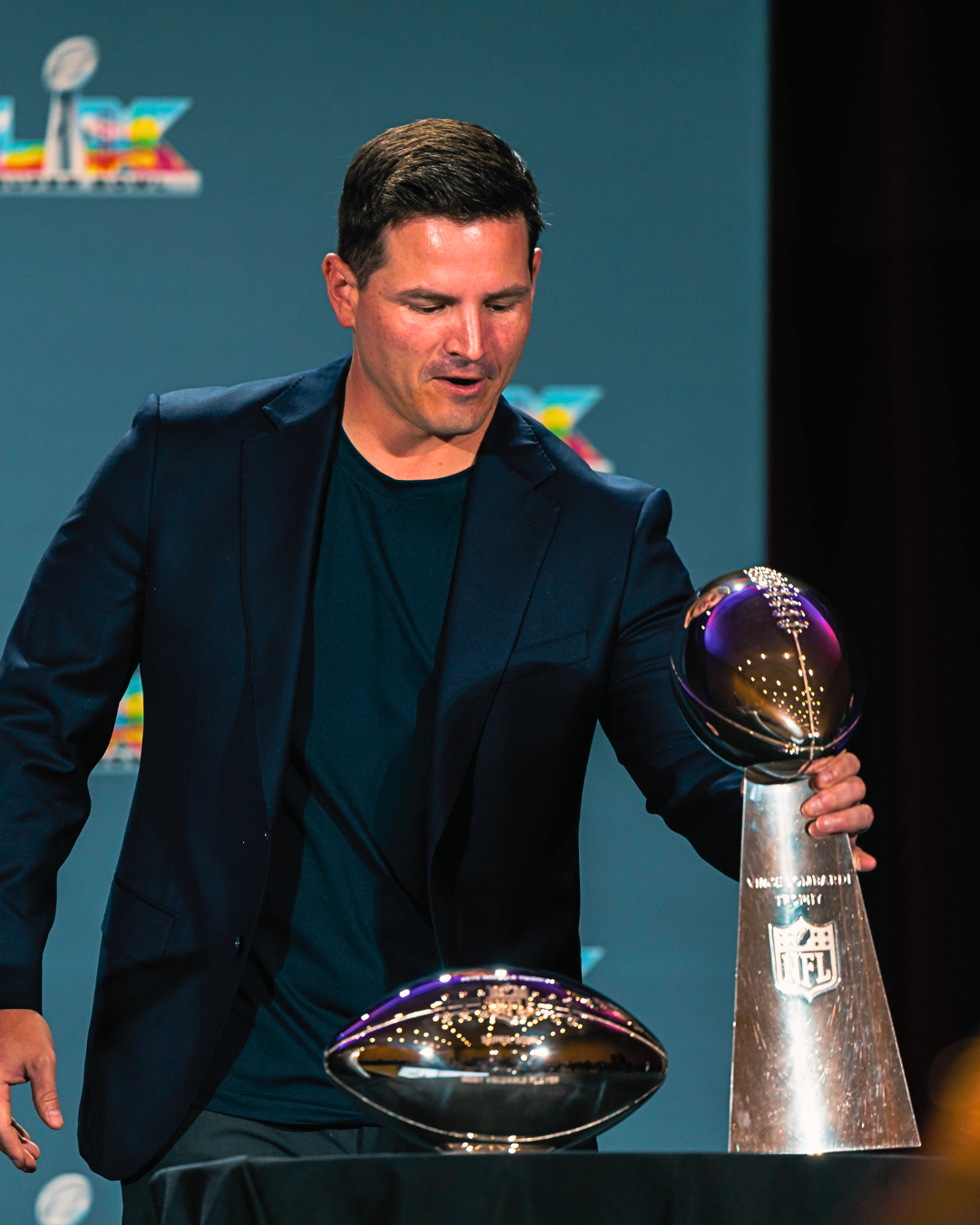
SAN FRANCISCO, CA - FEBRUARY 09: Head coach Mike Macdonald of the Seattle Seahawks puts down the Vince Lombardi trophy during a press conference, PK, Pressekonferenz after Super Bowl LX on February 9, 2026 at Moscone Center in San Francisco, CA https://www.imago-images.com/search?category=sport&querystring=seahawks%20super%20bowl
“And it’s intercepted at the goal line by Malcolm Butler!”
When the Seattle Seahawks fell one yard short against the New England Patriots in Super Bowl XLIX, the loss didn’t just end a championship run. It marked the beginning of a decade-long transformation.
From 2015 through 2025, the Seahawks did not collapse. They rebuilt themselves in real time through coordinator changes, draft decisions and eventually a complete shift in philosophy until the team that returned to the Super Bowl no longer resembled the one that lost in Glendale.
What followed wasn’t a straight climb back. It was a slow unraveling, a reset and eventually, a reinvention.
“Thank You God for the opportunity. We’ll be back,” Russell Wilson wrote after the loss.
Over the next decade, that line would read less like a certainty and more like unfinished business.
2015–2016
The immediate response suggested nothing needed to be fixed. Seattle went 10-6 in 2015, still led by Russell Wilson, who threw for 4,024 yards and 34 touchdowns, while the defense allowed just 17.3 points per game, best in the NFL. On paper, Seattle remained a contender.
But the tone had shifted. The goal-line decision lingered throughout the offseason and into the season, debated constantly across Twitter and sports media. The locker room felt it, too.
The roster was already beginning to change. Tyler Lockett emerged as a dynamic weapon, but efforts to rebuild the offensive line, including first-round pick Germain Ifedi failed to stabilize protection. When Marshawn Lynch retired, the offense lost its physical identity. Wilson battled injuries in 2016, further limiting what had once made Seattle unpredictable.
The Seahawks still finished 10-5-1 and won the NFC West in 2016. But the cracks were already forming, and the pieces replacing the championship core were not equal yet.
But the first playoff run after the Super Bowl showed the shift.
Against the Carolina Panthers, Seattle fell behind 31–0 before halftime. The late comeback made the score look close, but it revealed something new, this team no longer controlled games from the start.They were now the ones who were chasing.
2017
By 2017, the cracks became impossible to ignore. Injuries to Richard Sherman, Kam Chancellor and Cliff Avril dismantled the defense that had defined the franchise. The Legion of Boom was no more.
Wilson carried the offense, throwing for 3,983 yards and 34 touchdowns while accounting for over 80% of Seattle’s total production. But that imbalance exposed the real issues.
The problem wasn’t just injuries. The draft pipeline had not replaced what was lost. Key selections failed to develop into foundational players, leaving the roster thin at critical positions. Seattle finished 9-7 and missed the playoffs. For the first time under Pete Carroll, the Seahawks were reacting instead of building ahead. The Super Bowl window was slammed shut.
2018–2019
Seattle’s response came quickly, even if they refused to call it a rebuild. After the 2017 season, offensive coordinator Darrell Bevell and defensive coordinator Kris Richard were replaced by Brian Schottenheimer and Ken Norton Jr., signaling that the original blueprint wasn’t working anymore.
“We’re a little different,” Carroll said.
The offense shifted back toward Carroll’s core philosophy running the ball, controlling the clock and reestablishing their previous physicality. In 2018, Seattle led the NFL in rushing at 160.0 yards per game and returned to the playoffs at 10-6.
In the Wild Card loss to the Dallas Cowboys, Seattle had opportunities late. Then came the moment that defined the game: a 3rd-and-14 quarterback draw by Dak Prescott that sealed the outcome.
“It was a big time run,” Pete Carroll said afterward. “Well executed by them.”
“It cost us,” Bobby Wagner added. “We didn’t execute as long as we should have.”
The roster was younger and less defined by star power, but it was becoming more structured. That evolution accelerated in 2019 with the selection of D.K. Metcalf. He changed the offense, giving Seattle a vertical threat that forced defenses to adjust.
Wilson threw for 4,110 yards and 31 touchdowns, and Seattle went 11-5. But their success came from execution in close moments rather than dominance. They were no longer overwhelming teams. They were playing at whatever level of competition they faced.
That pattern followed Seattle into the divisional round against the Green Bay Packers.
For most of the game, the Seahawks trailed but never fully broke. They stayed within reach, leaning on late drives and Wilson’s ability to extend plays.
But defensively, the difference showed up early and often.Davante Adams consistently won his matchups, particularly against Tre Flowers, exposing a secondary that no longer had the depth or dominance it once relied on.
Seattle couldn’t get crucial stops and that resulted in another tough playoff loss in the divisional round.
2020
The phrase started online.“Let Russ Cook.” It spread quickly across Twitter and into national conversation. It wasn’t just a twitter hashtag. It was a public argument about the direction of the franchise. For five weeks, it worked. Seattle started 5-0, and Wilson threw 19 touchdowns in that stretch, playing at an MVP level.
Then the offense stalled and turnovers increased. The defense struggled early before stabilizing late.
Seattle finished 12-4.
The Wild Card loss to the Los Angeles Rams didn’t feel like an upset. It felt more like domination.
The offense that had exploded early in the season stalled completely, struggling to generate rhythm or adjust once pressure mounted and the defense struggled against career backup John Wolford and a very injured Jared Goff. Seattle managed just one offensive touchdown.
And Russell Wilson didn’t receive a single MVP vote.
For the first time, Seattle’s identity was unknown. It was being debated in real time by its own fan base and even their own players.
2021
Seattle tried to adjust. They hired Shane Waldron as offensive coordinator, bringing in a more modern system built on motion and spacing.
“We’re going to be a balanced offense that’s going to have the ability to create explosive plays with that attacking mindset,” Waldron said.
Wilson’s finger injury disrupted the season, the offense ranked 20th in total yards and the Seahawks finished 7-10.
The hiring of Waldron was supposed to modernize the offense, but it instead exposed how far apart the quarterback, coaching philosophy and roster construction had drifted. According to ESPN reporting, Wilson had grown frustrated with the offensive line and direction of the offense, even providing a list of teams he would consider if traded.
For the first time, it felt like the organization had reached its ceiling. The issue was no longer about a single season, it was becoming a philosophical battle between differing ideologies that were drifting further apart.
2022
The turning point came in 2022. Seattle traded Russell Wilson to Denver, a move that was met with immediate shock and criticism. Many expected a full rebuild. Instead, the Seahawks pivoted.
Geno Smith stepped in and delivered a career season, breaking Seattle’s single season passing yard record, throwing for 4,282 yards, 30 touchdowns and leading the league with a 69.8% completion rate.
More importantly, the draft reshaped the roster. Charles Cross and Abraham Lucas stabilized the offensive line, Kenneth Walker III restored explosiveness to the run game and Tariq Woolen emerged as a defensive playmaker with six interceptions.
Seattle went 9-8 and made the playoffs.
But the loss to the San Francisco 49ers showed the gap that was prevalent in NFC West. They led in the third quarter.Then gave up 25 unanswered points.
But for the first time in a long time, there seemed to be hope forming in Seattle once again.They were younger and hungrier and were itching for another shot at the postseason.
2023-2024
The Seahawks continued building through the draft. Devon Witherspoon brought physicality and edge back to the defense, while Jaxon Smith-Njigba added precision to the offense. The roster finally felt more balanced. But not quite elite.
Then came the defining organizational decision.
“We have amicably agreed…” ownership said as Pete Carroll stepped aside.
Carroll stepped down as head coach, ending the most successful era in franchise history. Seattle hired Mike Macdonald.It was a philosophical reset.
Carroll built Seattle through energy, competition and identity. Macdonald brought structure, disguise and adaptability.For the first time in a decade, the Seahawks weren’t trying to evolve the same system. They established a completely new one.
2025
By 2025, everything finally aligned. The structure that Mike Macdonald brought in 2024 wasn’t hypothetical anymore; it showed up on the field every week. Seattle finished 14–3, won the NFC West and secured the No. 1 seed in the conference, their best regular season in over a decade.
This season would define a new era. Geno Smith was traded. Sam Darnold, Cooper Kupp and Demarcus Lawrence were brought in over the offseason.
Darnold was shaky throughout the season, which was met with criticism online as Darnold turned the ball over 20 times during the regular season. Many fans believed these crucial and unnecessary turnovers would eventually be their downfall. But these Seahawks were resilient and refused to let that define them.
There was one moment that told the story better than any stat. A Thursday night game against the Rams turned into one of the wildest wins in franchise history, as Seattle erased a 16-point fourth-quarter deficit and won in overtime on a two-point conversion, a game that effectively locked up their playoff position and showed exactly how different this team was mentally.
The offense wasn’t built around run, run, pass, punt anymore. It was controlled, layered and efficient. The run game, led by Kenneth Walker III, became the tone-setter culminating in a Super Bowl MVP performance with 161 total yards.
The passing game evolved, too. Jaxon Smith-Njigba emerged as a true No. 1 option, putting together a historic season with 1,793 receiving yards and Offensive Player of the Year honors, redefining the ceiling of Seattle’s offense.
And defensively, the transformation was complete.What started as a schematic shift under Macdonald turned into an identity. The unit earned the nickname “The Dark Side,” a reflection of its aggressiveness, versatility and ability to generate takeaways in key moments. They were something new and more flexible, more unpredictable and built for the modern game.
That identity carried through the playoffs. Seattle dominated the 49ers in the divisional round 41-6, edged the Rams in the NFC Championship 31-27 and then finished the run with a 29–13 win over the Patriots in Super Bowl LX, securing the franchise’s second championship.
And the best part.
They went through the entire postseason without committing a single turnover, something no Super Bowl champion had ever done. That was the result of a decade of rebuilding not by tearing everything down, but by reshaping the roster, evolving the coaching staff and finally committing to a philosophy that matched the team.
“I believe God called me to be a coach… and now, we’re world champions,” Mike Macdonald said.
Ten years after falling one yard short, Seattle went all the way once again.
