

Why PSG and Bayern Munich Are The Next Great European Rivalry
identity based schemes that actually work are unstoppable but rare. Now, we have two that may be around for a while…
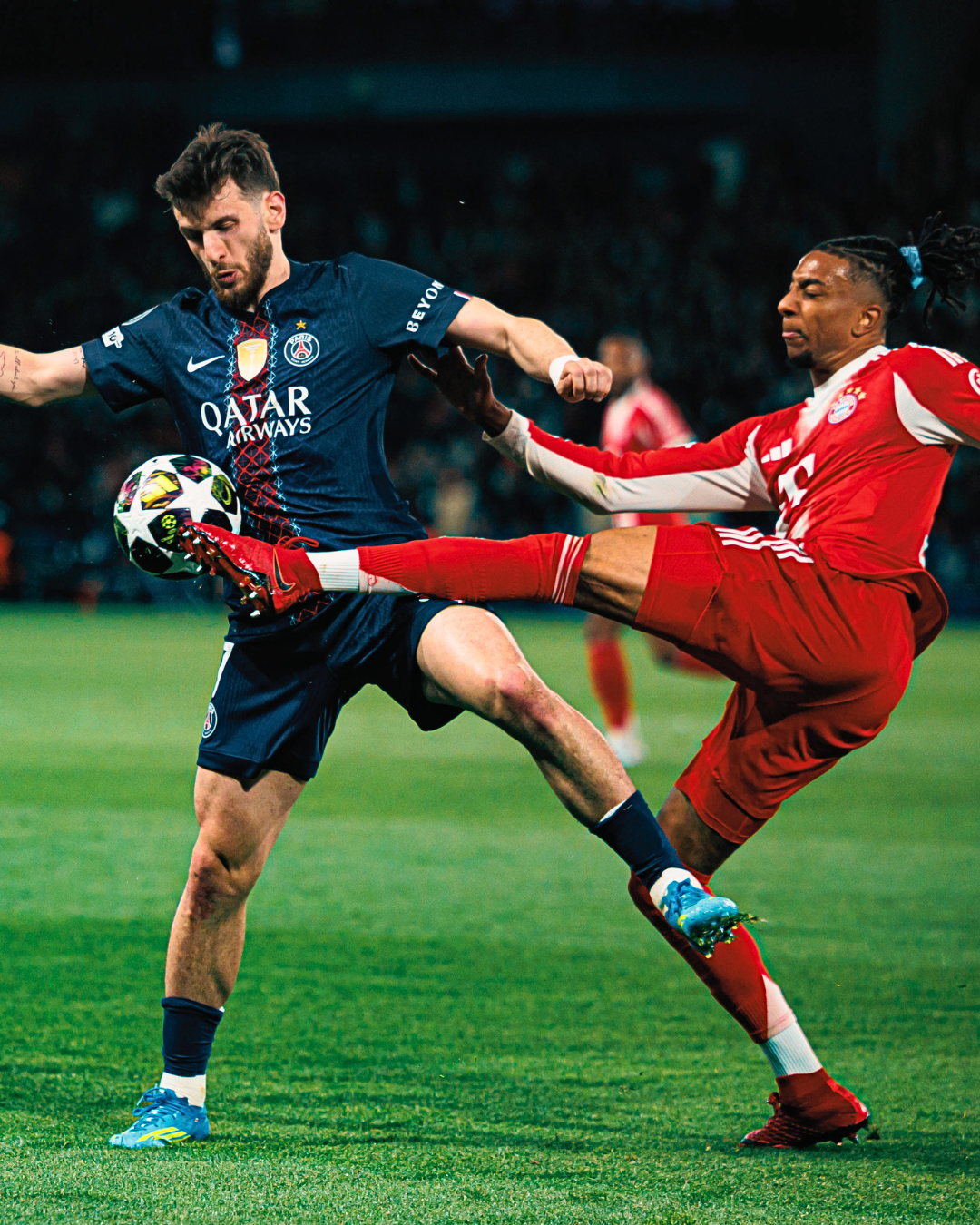
Khvicha Kvaratskhelia and Michael Olise seen during UEFA Champions League semifinal game between teams of Paris Saint-Germain Football Club and FC Bayern Munchen (Maciej Rogowski Ball Raw Images PT) Paris Parc des Princes France Copyright:
The UEFA Champions League semi-final match between Paris Saint-Germain and Bayern Munich last Tuesday was arguably one of the best football games ever, point blank period. After it was set that both teams would meet each other in the semifinals, many fans deemed this game “the real UCL Final”, and after jaw dropping goals and performances in yesterday’s game to cap off incredible seasons for both clubs, it’s incredibly fair to stick to that statement.
So what exactly separates Paris Saint-Germain and Bayern Munich? Both teams are loaded with talent but so are a handful of other European clubs. But the first leg of the semifinals and the entirety of both club’s seasons display a clear answer; the ability to blend talent and fluidity.
Let’s take it back to the 2010s, an era that saw two teams really put this philosophy in full effect more than anybody else. Behind just seeing Messi and Ronaldo clash during El Clasico matches, Barcelona and Real Madrid from top to bottom were some of the most complete teams football has ever seen.
But beyond the flashy names of Neymar, Bale, Benzema, Modric, Suarez, Iniesta, Kroos, Busquests, and many more, were systems of stability that controlled the flow of the game from start to finish. Real Madrid and Barcelona weren’t the only superteams of their era, but it’s no coincidence that the premier spanish clubs defined football with their own methods of high press and ball movement
“I would love this team to communicate something that is maybe not so normal you know, like, can you be good individuals but also the best team? Can you be the most talented players but also the hardest-working team?” Stated Bayern Munich manager Vincent Kompany in one of his inaugural interviews, shortly after being named Bayern Munich’s new manager in late May of 2024.
Kompany from the very start wanted to implement a system that would take the best traits of each player and use them for the greater good of the team. Doing so results in not just building a solid system, but one that networks identity into a structure that's primarily focused on what you do best and how one player’s strengths can benefit another’s weaknesses. Now let’s compare, because while this tactic is desired by many, its been executed by only a few, and all time French legend Zinedine Zidane who led Real Madrid to their infamous three-peat from 2016-2018 is the most recent example of this.
Zidane’s model of management was one of trust, communication, and a balance of control and freedom for the many stars on that infamous Real Madrid squad. When you go player for player, some of the biggest names of the 2010s made a name for themselves on Real Madrid, but to convert individual stardom to team success was a process easier said than done. The late 2010s Real Madrid team was built off trust, enhancement of player fortes, and tactical flexibility, meaning that whatever in-game situation was thrown at them, they would overcome because their tactics were built on who they were, not what football told them to be.
Bayern Munich currently displays this as well. While they’ve been a dominant force this season especially on the scoring end, it can easily be forgotten how much adversity they’ve overcome. In comparison to Real Madrid’s Champions League dogfights against Wolfsburg in 2016 in which they were down 2-0 and came back to win 3-2, the extra time victory against Bayern in 2017, and the semi-finals win against Bayern again a year later, Bayern Munich in 2026 have displayed the same level of resilience by using tactical adaptability, such as against Real Madrid in the quarterfinal 2nd leg, the late comeback against Freiburg on April 4th, and the win against Dortmund on February 28.
But a few more tests lie in front; and one of them is the perfect matchup for a team so operated on chemistry.
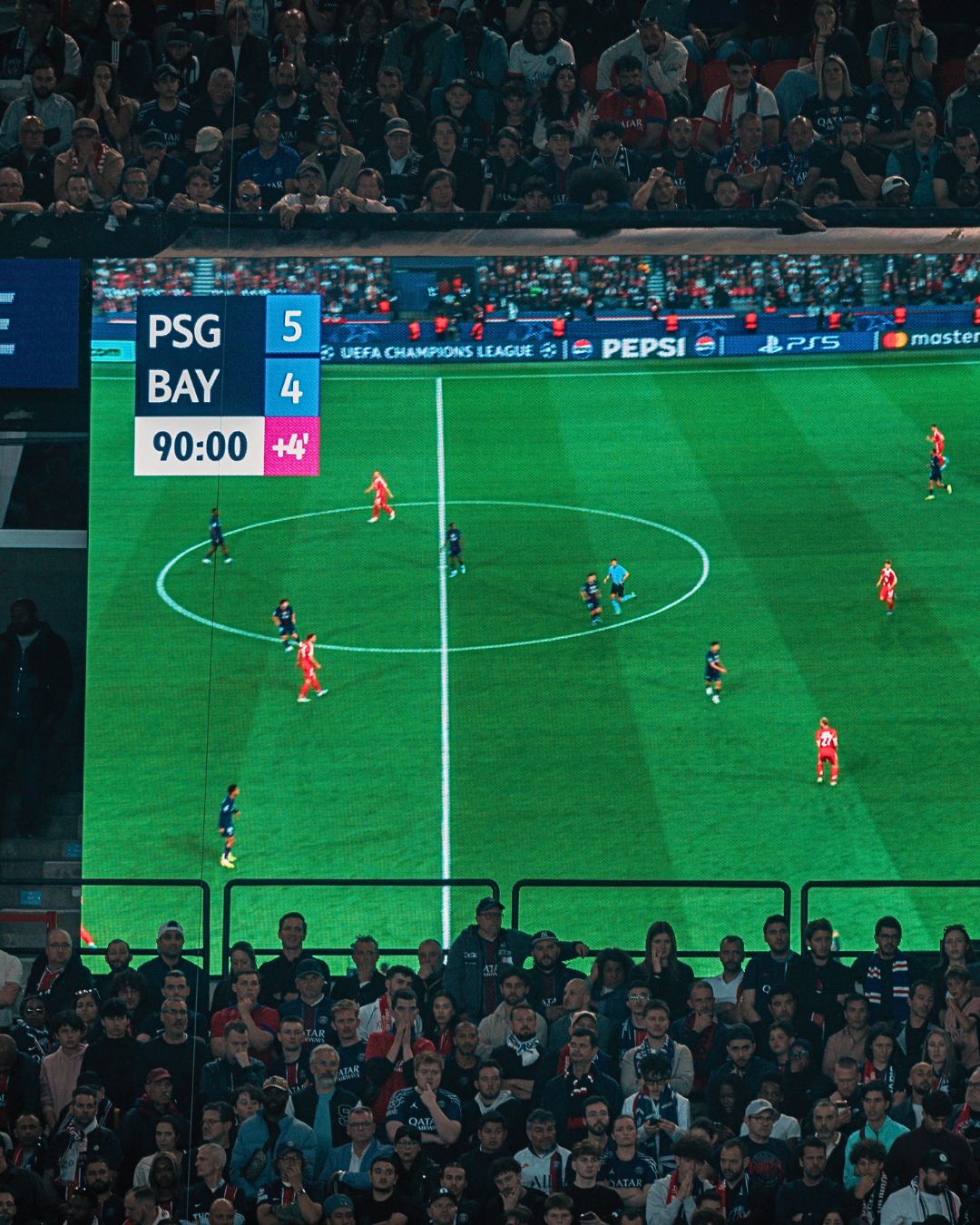
Paris, France. 28th Apr 2026. Anzeigetafel 5:4 Paris Saint-Germain - FC Bayern München 28.04.2026 *** Paris, France 28th Apr 2026 Scoreboard 5 4 Paris Saint Germain FC Bayern Munich 28 04 2026
Luis Enrique is nothing short of one of the best managers European football has seen. Dating back to his Barcelona days in 2014, Enrique adopted the ‘tiki taka’ style that Pep Guardiola had put in place, and used it to create a style of creative football that thrived in the transitional phases of the game. Under Enrique, Barcelona not only lit up the scoreboard but controlled the pace of the game from the very beginning with how strong their midfield was, often forcing opponents to spend 90 minutes reacting and sometimes never initiating anything of their own. This tactic, while short lived, gave us one of the best peaks in football history, led by the household attack of MSN (Messi, Suarez, and Neymar).
But Enrique’s style didn’t die in Barcelona, it went into hibernation and then relocated 500 miles north to Paris.
What makes this PSG team so interesting is the investment in players who were pretty under the radar for most fans. After Messi, Mbappe, and Neymar didn’t work, PSG cleaned house and went for a different approach, seeking out talent filtered by philosophy instead of vice versa. Because of this, PSG was able to bring home the 2024/25 Champions League, and is 2 games away from being the first team to repeat as winners since Real Madrid’s threepeat.
The attack of French Ballon D’or winner Ousmane Dembele, Georgian winger Khvicha Kvaratskhelia, and French winger Desire Doue has been nothing short of electric in their play, but a lot of credit should go to the midfield as well, a level of PSG’s play that has gone overlooked. Portuguese midfielder Vitinha currently leads the Champions League in accurate passes per game, with 94.5 (93% success rate).
But Enrique’s major change that allowed his prior Barcelona methods to remain compatible with modern day football, is the use of two-way defenders. Moroccan right back Achraf Hakimi and Portuguese left back Nuno Mendes play a unique role of an extra winger. Both have been excellent in taking care of the ball and Hakimi has assisted 6 goals this season, the most not just by a defender but tied only with Michael Olise for the most out of every Champions League player this season. The additional wing support from all the way in the back of the field in a 4-3-3 formation is risky, but with how aggressive PSG naturally is, it all works out.
Hakimi and Mendes as facilitators is so crucial to PSG’s ability to stretch the field, and opens more options for them as far as moving the ball. If you include Brazilian center-back Marquinhos and Ecuadorian defender Willian Pacho, Paris Saint-Germain has 4 defenders within the top 40 most accurate passes per game, bringing the total up to Vitinha. The backline of PSG takes so much pressure off their attack, preserving stamina and prolonging the window that they can perform at their best.
Unfortunately for PSG, Hakimi suffered a hamstring injury during leg 1’s 5-4 thriller, forcing him to miss the 2nd leg, a crucial loss for PSG as they prepare to travel to Munich. In that position, they’ll be relying on Frenchmen Senny Mayulu to play that role, a 19 year old midfielder with experience in the multi-position system that PSG enforces.
Paris Saint-Germain and Bayern Munich will face off on Wednesday May 6th in the Allianz Arena for a trip to the 2026 Champions League final on the line. In a game that could either lead to the start of a dynasty and Enrique in legendary conversations, or the rebirth of a German giant to cap off a historical season, the only thing that is certain is uncertainty until the final whistle blows. And whether that be after 90 minutes, 120 minutes, or none at all following a penalty shootout, we can be glad that new alphas in football have arrived, and should be here to stay for a while.