

2026 NFL Draft Grades
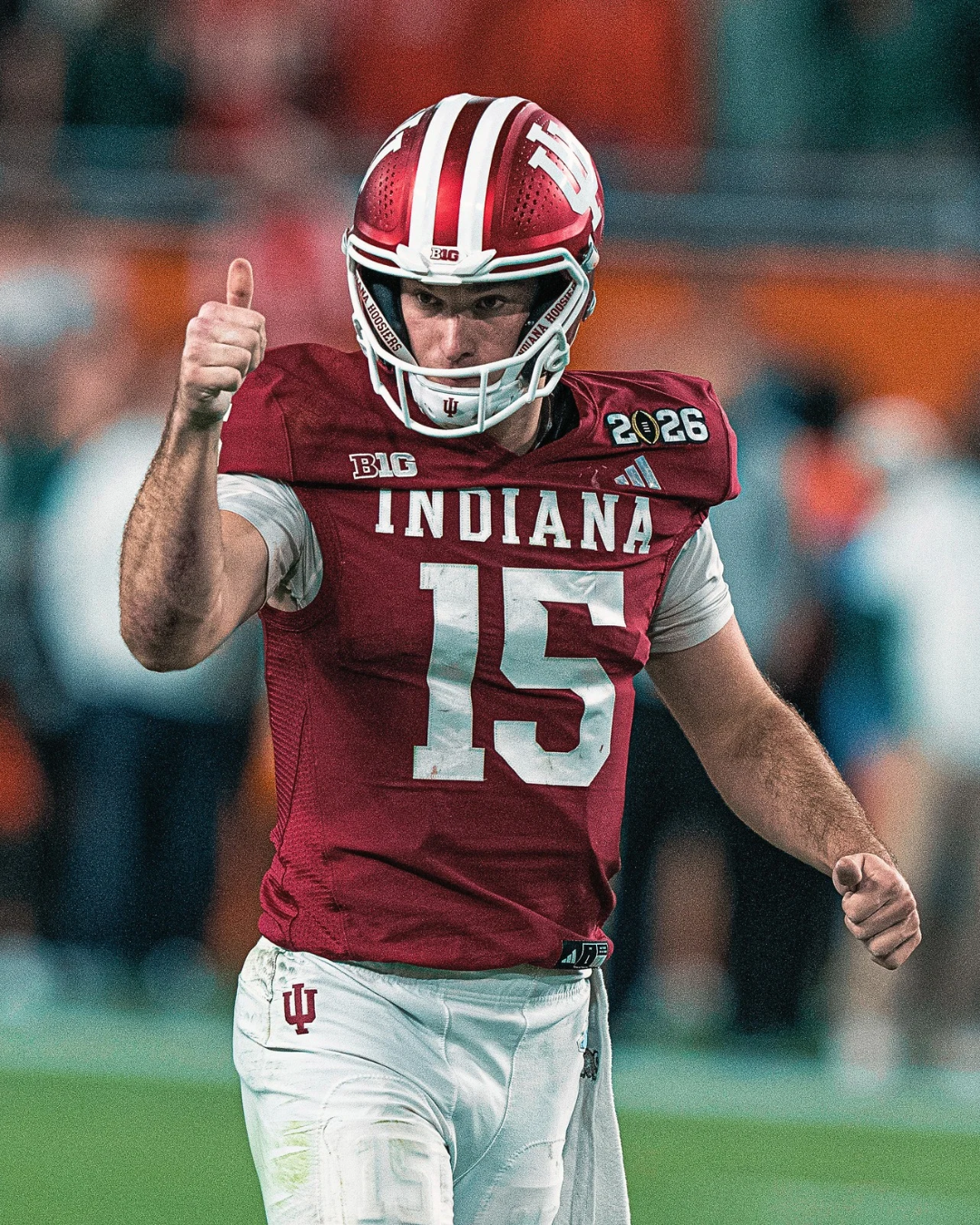
January 19, 2026, Indianapolis, Indiana, USA: Indiana University s quarterback FERNANDO MENDOZA signals to a teammate the College Football National Championship. Indiana went on to win over the University of Miami, 27-21. Indianapolis USA - ZUMAr44_ 20260119_zsp_r44_007 Copyright: xThomasxJ.xRussox
The entire 2026 NFL Draft is officially in the books, and across all 7 rounds was a plethora of trades, absolute steals, and head scratching selections to level out the excitement. We saw team-changing picks such as Styles, Downs, and Bain, head scratching quarterback selections like Simpson and Beck, and many under the radar potential starters on day. Here is my entire 32 team analysis of all 257 players selected into the NFL…
AFC
AFC North
Cleveland Browns: A+
9: Utah OT Spencer Fano
24: Texas A&M WR KC Concepcion
39: Washington WR Denzel Boston
58: Toledo S Emmanuel McNeil-Warren
86: Florida T Austin Barber
146: Alabama C Parker Brailsford
149: Alabama LB Justin Jefferson
170: Cincinnati TE Joe Royer
182: Arkansas QB Taylen Green
248: BYU TE Carsen Ryan
Coming into a draft with a situation full of blaring flaws, Cleveland addressed multiple offensive issues in the correct manner. With their QB situation still an asterisk and while not necessarily being in a position to actually fix it, the Browns made the best possible selection at each pick with the intent of possibly gearing up for a quarterback next year. Utah offensive tackle Spencer Fano and Texas A&M receiver KC Concepcion are both good value safe selections for a team that is looking to finally build some offensive identity, and if the Browns are able to bring in a quarterback (or if Shedeur Sanders suddenly breaks out), those two will be anchors for the new era of the Browns offense. On the defensive side, Toledo box safety Emmanuel McNeil-Warren should bring a level of intensity to an already strong Browns defense, and picking him up in the late 20s is one of the premier steals of the draft. The Browns day 3 selections will be excellent for depth and overall they thrived in terms of the value of their picks
Baltimore Ravens: B
14: Penn State G Olaivavega Ioane
45: Missouri ED Zion Young
80: USC WR Ja’Kobi Lane
115: Indiana WR, Elijah Sarratt
133: SMU TE Matthew Hibner
162: Duke CB Chandler Rivers
173: Alabama TE Josh Cuevas
174: Clemson HB Adam Randall
211: Michigan State P Ryan Eckley
250: Michigan DL Rayshaun Benny
253: Northwestern G Evan Beernsten
While many Ravens fans were eyeing support at the skill position for Lamar, Penn State guard Olaivavega Ioane fills arguably an even bigger need, interior offensive line. According to PFF, the right guard slot was responsible for 18% of pressures allowed with Lamar in the pocket, the highest out of any of the 5 specified offensive linemen positions. You can never necessarily go wrong with linemen in the first round, especially if you already have your answer at quarterback. This may not have been the sexy pick, but it was certainly a correct one. The additional needs such as receiver and edge were also addressed at fair value, and overall Baltimore put together a draft that checked off the boxes; something you can’t really be mad at a team for doing.
Pittsburgh Steelers: C+
21: Arizona State T Max Iheanachor
47: Alabama WR Germie Bernard
76: Penn State QB Drew Allar
85: Georgia CB Daylan Everette
96: Iowa T Gennings Dunker
121: Iowa WR Kaden Wetjen
169: Indiana TE Riley Nowakowski
210: Notre Dame DL Gabriel Rubio
224: Oklahoma S Robert Spears-Jennings
230: Navy FB Eli Heidenreich
The painful part of this pick is the elephant in the room; Makai Lemon was theirs, and then Philadelphia traded up. While they won’t walk away from this draft with a top pass catching prospect, Iheanachor provides youth at the tackle position, something the Steelers desperately need considering the extensive injury history of 4th year offensive tackle Broderick Jones. The Steelers were able to make the right selection at a somewhat inconvenient spot, but the rest of this draft just lacked impact guys, and you want to walk away with at least 2 players you’re confident you can depend on right away. Their class has a lot of upside, but for a team that hasn’t won a playoff game in a decade, potential isn’t a needle mover.
Cincinnati Bengals: B
41: Texas A&M ED Cashius Howell
72: Washington CB Tacario Davis
128: Auburn C Connor Lew
140: Georgia WR Colbie Young
189: Duke T Brian Parker II
221: Texas TE Jack Endries
226: Navy DL Landon Robinson
Considering they didn’t have a 1st round pick after the Dexter Lawrence trade on April 18th, the Bengals surprisingly found good defensive value in the 2nd and 3rd rounds of the draft. Part of that may be in comparison to how much of a liability their defense has previously been, but if I'm a Bengals fan, I'm walking away from this draft at the very least satisfied, at least considering the circumstances of where they had to pick from. I’m especially a fan of 3rd round pick Tacario Davis putting on the striped helmet. He’s physical at the line of scrimmage, is an excellent tackler on the perimeter, and his sheer athleticism should make him a solid perimeter corner for Cincinnati. Overall not having their 1st round pick does still sting, but even if they dealt themselves the cards, the Bengals played them well.
AFC East
New York Jets: A
2: Texas Tech ED David Bailey
16: Oregon TE Kenyon Sadiq
30: Indiana WR Omar Cooper Jr
50: Indiana CB D’Angelo Ponds
103: Florida State DL Darrell Jackson Jr
110: Clemson QB Cade Klubnik
188: Miami G Anez Cooper
228: Kansas State S VJ Payne
With 3 first round picks, it’s harder to have a bad draft then it is a good one. Oregon tight end Kenyon Sadiq and Indiana receiver Omar Cooper Jr are both game changing pass catchers that can spread the field and finally bring a sense of excitement to a Jets offense that’s been bland forever. David Bailey at 2 is a bit underwhelming considering the arguably more impactful defensive players on the board;his lack of physical flexibility might make him a one-dimensional edge rusher, but at the end of the day he’s a GOOD defensive player that will bring upside to the historically bad Jets’ defense from 2025. For a team gearing up for a true franchise quarterback in next year’s draft, the picks made in the past 3 days are the correct ones. In today’s NFL, the important part of drafting is how your day 3 scouting pans out, and the Jets 4-7 round selections have a lot of starting potential down the line.
Miami Dolphins: B-
12: Alabama T Kadyn Proctor
27: San Diego State CB Chris Johnson
43: Texas Tech LB Jacob Rodriguez
75: Texas Tech WR Caleb Douglas
87: Ohio State TE Will Kacmarek
94: Louisville WR Chris Bell
130: Texas LB Trey Moore
138: Pittsburgh LB Kyle Louis
158: Texas S Michael Taaffe
177: Missouri WR Kevin Coleman
180: Mississippi State TE Seydou Traore
200: Texas G DJ Campbell
After trading back a spot with the Dallas Cowboys, Miami selected Alabama offensive tackle Kadyn Proctor. It’s a pick that’s good on paper and does in fact fill one of many needs for the Dolphins, but the obvious selection was Rueben Bain or Caleb Downs, two phenomenal prospects that were projected day 1 starters. On the contrary, Kadyn Proctor is a good starter who will at least be solid, especially considering the long line of phenomenal Alabama o-lineman in the NFL. To follow it up however, might be the best coordinated draft out of every team in 2026, as Miami hit on secondary needs, receiver help, and most notably an entire linebacker room. The Dolphins deserve to pat themselves on the back, and while I do think missing out on Downs or Bain stings, overall their 2026 Draft Class is very well put together. The right steps in what will be a long process are being took in Miami.
New England Patriots: C
28: Utah T Caleb Lomu
55: Illinois ED Gabe Jacas
95: Notre Dame TE Eli Raridon
171: Wake Forest CB Karon Prunty
196: Texas A&M T Dametrious Crownover
212: TCU LB Namdi Obiazor
234: Texas Tech QB Behren Morton
245: Alabama HB Jam Miller
247: Boston College ED Quintayvious Hutchins
New England didn’t draft bad, but you have to admit it is quite underwhelming for a team looking to capitalize off their Super Bowl appearance. Wake Forest CB Karon Prunty stands out the most, as he brings a dynamic coverage ability to a team that values trust in their defensive players as seen with Christian Gonzalez. But it’s hard to look at New England before the draft vs after and say unironically with a straight face that they got better. In their defense, the needle mover of the Offseason will be the inevitable post June 1st AJ Brown trade, so supporting cast most likely wasn’t that high on New Englands draft board. But this class lacks true upside, and looks to be more like a forgettable one down the line.
Buffalo Bills: D
35: Clemson ED T.J Parker
62: Ohio State CB Davison Igbinosun
102: Boston College T Jude Bowry
125: Connecticut WR Skyler Bell
126: TCU LB Kaleb Elarms-Orr
167: South Carolina CB Jalon Kilgore
181: Penn State DL Zane Durant
220: Missouri CB Toriano Pride Jr.
239: Florida P Tommy Dorman
241: Texas A&M G Ar’maj Reed-Adams
The Bills drafting philosophy has always brought me pause. The complacency with a team mostly full of 2nd options has often held Buffalo back, especially in January when the combination of depth and stars matter more then ever. But while trading out of the 1st round all together off of 3 consecutive transactions is a non-negotiable point deduction, the ideology can be argued for. Considering Buffalo is usually drafting anywhere from the 24-30 range, trading back in the midst of one the deepest defensive classes and stacking up on picks for the back end of the draft makes plenty of sense. As mentioned earlier, the 2026 Draft Class was one of the best groups of defensive players a class has seen in quite some time, insinuating you can comfortably trade back and bring in a player of high caliber regardless of it being day 1 or 2. The Bills without a doubt made up for their trade on day 1, and can sleep well at night with the rookie class they managed to bring in.
AFC South
Tennessee Titans: B
4: Ohio State WR Carnell Tate
31: Auburn ED Keldric Faulk
60: Texas LB Anthony Hill Jr.
142: Arkansas Razorbacks G Fernando Carmona
165: Penn State RB Nicholas Singleton
184: Baylor ED Jackie Marshall
194: Indiana C Pat Coogan
225: Oklahoma TE Jaren Kanak
While many didn’t have Ohio State deep threat Carnell Tate going as high as 4, him going to a team where he’ll have help in the slot from Wandale Robinson which will generate more 1 on 1 looks might make that pick worth it. In the opinion of many, USC standout Makai Lemon was the best receiver in the class, as his well rounded nature makes him flexible for any scheme he’s thrown into. Carnell Tate is certainly a good receiver and will be a rock solid downfield threat for Cam Ward, but for his production to match the 4th overall pick, we would have to have him in borderline all-pro conversations. I’m honestly more fond of Texas linebacker Anthony Hill, and Titans fans should be eager to see how he fits into Robert Saleh’s new defensive principles. The Titans are a work in progress with a floor that doesn’t get any lower than their previous 2 campaigns, so making the safe picks is a good way to establish yourself as a rebuilding franchise.
Houston Texans: B
26: Georgia Tech G Keylan Rutledge
36: Ohio State DL Kayden McDonald
59: Michigan TE Marlin Klein
106: Oklahoma G Febechi Nwauiwu
123: Clemson LB Wade Woodaz
141: USC S Kamari Ramsey
204: Boston College WR Lewis Bond
243: Indiana LB Aiden Fisher
Unless you’ve been living under a rock you know that the Texans need offensive line badly, but Keylan Rutledge was a reach that Houston most likely could have either taken later, or went in another direction as far as offensive lineman. Rutledge is a better run blocking guard than a pass protection one, and his struggle to keep a grip on inside leverage may open a lot of room for stunts and linebackers to missile through the line. While he may be durable and aggressive, Houston’s offensive line needs technicality and instinct, and i’m not sure Rutledge offers that. The Texans’ defense continues to grow stronger however, with interior defensive lineman Kayden McDonald getting the call from a 713 area code at pick 36. McDonald is ruthless, yet keen, and adds another level of depth to a defense that was already singlehandedly keeping their team in games. Across the rest of the board, Houston was able to add linebacker depth, guys to compete for starting receiver spots, and additional pass pro support, in both Oklahoma guard Febechi Nwaiwu and Michigan tight end Marlin Klein.
Indianapolis Colts: A-
53: Georgia LB CJ Allen
78: LSU S A.J Hauley
113: Kentucky G Jalen Farmer
135: Oregon LB Bryce Boettcher
156: Florida ED George Gumbs Jr.
214: Ohio State ED Caden Curry
237: Kentucky HB Seth McGowan
238: Iowa ED Max Llewellyn
254: Oklahoma WR Deion Burks
With no first round pick due to the Sauce Gardner trade back in the middle of the 2025 season, the Colts had a very good, under the radar draft that involved the selection of multiple guys who will add physicality to the defense. Georgia LB CJ Allen is a standout example of this, as his witty coverage instincts and gap discipline will provide Indianapolis with dynamic off ball support they haven’t seen since Shaq (formerly Darius) Leonard. LSU safety AJ Hauley provides back end support at the safety position as well, a spot that hasn’t been a liability for the Colts, but was long overdue for an upgrade, expectations that Hauley will likely meet. But Indy’s biggest steal was no doubt Ohio State edge rusher Caden Curry in the 6th round. Curry is a productive edge on both traditional pass rushing snaps while also planting himself as a brick wall against the run, and while his pure athleticism may limit him at edge rusher, under a scheme of defensive unpredictability via Colts defensive coordinator Lou Anarumo, Curry should find himself taking advantage of the many stunts the Colts will throw at teams in 2026.
Jacksonville Jaguars: D
56: Texas A&M TE Nate Boerkircher
81: Texas A&M DL Albert Regis
88: Oregon G Emmanuel Pregnon
100: Maryland S Jalen Huskey
119: Duke ED Wesley Williams
164: Houston TE Tanner Koziol
191: Baylor WR Josh Cameron
203: Stanford WR CJ Williams
233: Washington ED Zach Durfee
240: MTSU LB Parker Hughes
Texas A&M tight end Nate Boerkircher being the Jaguars initial pick of their 2026 draft set the tone for the rest of the class, and while he has shown a lot of NFL readiness on his tape, he’ll be 25 at the start of the season, which puts a lot of pressure on both him the Jaguars to mold him into an immediate impact player. Jacksonville’s best pick was by far Emmanuel Pregnon in late round 3, an Oregon guard who was high on many analysts draft boards but slipped to pick 88 to a team in need of line depth. His professional upside is present, but him being the only pick of value in the Jaguars’ class is alarming. After a 13-4 season where many expectations were beyond met but many pieces were lost in free agency, Jacksonville failed to capitalize on the draft, and will now have to overflow their reliance into their 2025 class to generate any upside.
AFC West
Las Vegas Raiders: A
1: Indiana QB Fernando Mendoza
38: Arizona CB Treydan Stukes
67: Auburn ED Keyron Crawford
91: Texas A&M T Trey Zuhn III
101: Tennessee CB Jermod McCoy
122: Arkansas HB Mike Washington
150: Arizona S Dalton Johnson
175: California CB Hezekiah Masses
195: Oregon WR Malik Benson
229: North Carolina State DL Brandon Cleveland
Beyond the obvious Fernando Mendoza selection, the Raiders put together a superb draft class with multiple pieces at positions of need. A secondary that was middle of pack in 2025 in terms of yards allowed, the icing on the cake will very well be the corner duo of Stukes and McCoy. Despite the reports of his potentially severe cartilage issues after his ACL tear in early 2025, many compared McCoy to former Michigan now Arizona Cardinals cornerback Will Johnson, who faced similar concerns entering the draft and ended up playing a really promising rookie season. While it may be a while before the Raiders are true contenders, you have to give them credit for how consistently well they’ve drafted over the past 3 years, and with day 3 picks like this year’s, it’s only a matter of time before everything starts to come together for Vegas.
Kansas City Chiefs: A-
6: LSU CB Mansoor Delane
29: Clemson DL Peter Woods
40: Oklahoma ED R Mason Thomas
109: Oregon CB Jadon Canady
161: Nebraska HB Emmett Johnson
176: Cincinnati WR Cyrus Allen
249: LSU QB Garrett Nussmeier
The trade up for All-American LSU corner Mansoor Delane was not just worth it, but much needed after the Trent McDuffie trade a month prior. For a team that usually drafts DBs late and develops them based off defensive coordinator Steve Spagnola’s schemes, Kansas City felt the need to simplify their CB1 philosophy, and hit a home run for the best guy available. While also grabbing standout Clemson interior defensive lineman Peter Woods as Chris Jones ages in the background, the Chiefs spend this draft wasting no time finding guys to replace their core. This draft for the Chiefs was the icing on the cake to what’s been a productive off-season, and the correct steps to return to glory as one of the premier AFC teams have been taken.
Los Angeles Chargers: B+
22: Miami ED Akheem Mesidor
63: Florida C Jake Slaughter
105: Mississippi State WR Brenen Thompson
117: Memphis T Travis Burke
131: Arizona S Genesis Smith
145: South Carolina DL Nick Barrett
202: Boston College G Logan Taylor
206: Oregon T Alex Harkey
While Miami edge rusher Akheem Mesidor is entering the NFL at 25 years old, his ability to win reps quick and also plug gaps against the run makes him an automatic difference maker in the NFL. Throwing him into a rotation of Mack and Tuipulotu will preserve stamina and maximize each individual talent for the greater good of the Chargers defensive line, making Mesidor an addition that completes the locker room so to speak. Going in the direction of receiver earlier would have benefited Los Angeles tremendously, but Miss. State product Brenen Thompson provides a safe yards after catch option who can fit wherever new offensive coordinator Mike McDaniel wants to put him. Overall the Chargers focused a lot on roster depth, and for a team that’s been notorious for their laundry list of recent injury history, a “why not” draft is exactly what the doctor ordered.
Denver Broncos: C+
66: Texas A&M DL Tyler Onyedim
108: Washington HB Jonah Coleman
111: Boise State T Kage Casey
152: North Carolina State TE Justin Joly
246: Illinois S Miles Scott
256: Utah TE Dallen Bentley
257: Buffalo LB Red Murdock
With the Jaylen Waddle trade occurring just a few weeks prior, the Broncos biggest need going into 2026 being receiver was already addressed, opening the door for a “best player available” mentality entering the draft. Trading out of the 2nd for additional day 3 picks was the right move in Denver’s eyes, as outside of maybe 2-3 starters the best route for draft selections were compliments to the talent Denver already possesses. But what they should be most proud of is NC State tight end Justin Joly, who although widely received day 2 grades across many big boards, slipped into round 4 and will have ample opportunity to make a name for himself in that locker room.
NFC
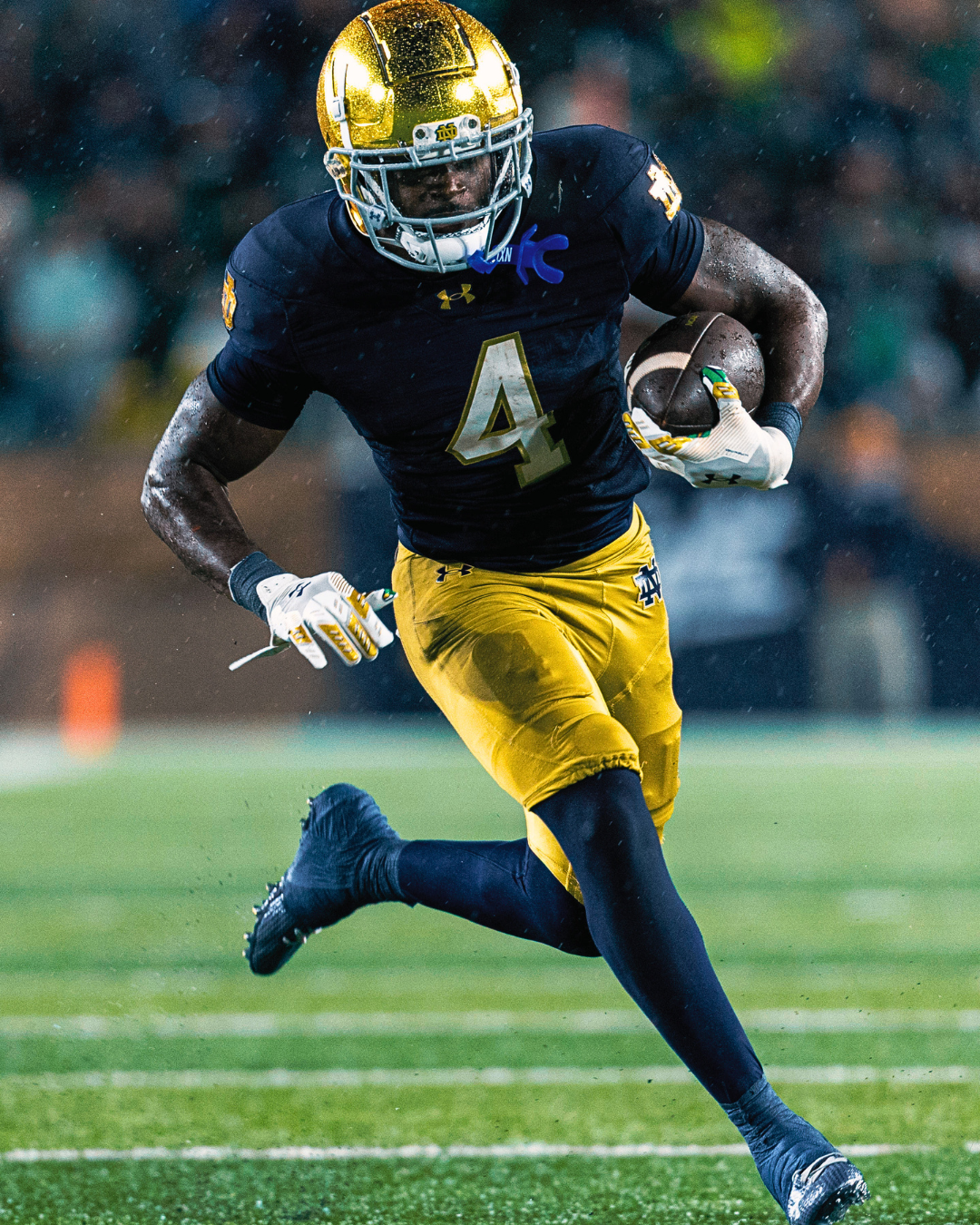
October 18, 2025: Notre Dame running back Jeremiyah Love (4) runs with the ball during NCAA, College League, USA football game action between the USC Trojans and the Notre Dame Fighting Irish at Notre Dame Stadium in South Bend, Indiana. CSM South Bend United States of America
NFC North
Detroit Lions: B-
17: Clemson T Blake Miller
44: Michigan ED Derrick Moore
118: Michigan LB Jimmy Rolder
157: Arizona State CB Keith Abney II
168: Kentucky WR Kendrick Law
205: Texas Tech DL Skyler Gill-Howard
222: Tennessee ED Tyre West
Detroit has received a lot of rightful credit for their recent draft picks but their problem in the span of the last year has been drafting players to replace what’s lost, instead of those picks representing additions to an already strong roster, as Clemson offensive tackle Blake Miller and Michigan edge rusher Derrick Moore both arrive in Detroit as starter replacements, with tackle Taylor Decker and edge Al-Quadin Muhammad leaving in free agency. However following a relatively strong free agency, Detroit left the draft with very precise selections, and can comfortably say they made the right decisions.
Minnesota Vikings: C+
16: Florida DL Caleb Banks
51: Cincinnati LB Jake Golday
82: Iowa State DL Dominique Orange
97: Northwestern T Caleb Tiernan
98: Miami S Jakobe Thomas
159: Michigan TE Max Bredeson
163: Stephen F. Austin CB Charles Demmings
198: Wake Forest HB Demond Claiborne
235: Cincinnati C Gavin Gerhardt
Florida interior defensive lineman Caleb Banks fits into Brian Flores’ defense like a new pair of shoes, and his ability to rotate between the 0, 1, and 2 tech shouts that him and Flores’ are a dream matchup and a nightmare combination for opposing offenses, making this one of my favorite picks in the entire draft. Outside of that however, Minnesota was lackluster, and while the picks made weren’t bad by any means, there was so much left on the table to elevate the weaker spots of the roster. The Vikings 53-man will be relatively complete once September rolls around, but it felt like their objective was to “settle”, which lacks logic not just as an individual team, but with the added consideration of how much their division is improving around them.
Chicago Bears: A-
25: Oregon S Dillon Thieneman
57: Iowa C Logan Jones
69: Stanford TE Sam Roush
89: LSU WR Zavion Thomas
124: Texas CB Malik Muhammad
166: Arizona State LB Keyshaun Elliott
213: Georgia Tech DL Jordan van den Berg
Free agency saw the departure of many key pieces of the Bears secondary (Byard, Wright, Brisker, Johnson), so Oregon safety Dillon Thieneman is an answered prayer for Chicago’s secondary. His athleticism alone has poured into so many of his traits as a football player but what truly stands out about him is his IQ, and how disciplined he is with reading plays and shutting lanes down before they even open. But while many speak about him, Texas corner Malik Muhammad who thrived in one of the best NCAA secondaries, might be in conversation for one of the premier steals of the entire draft, and him going in round 4 should point to someone in the Bears’ front office getting a raise. Chicago lost a lot of notable names this offseason, many of which were key parts to their storybook 2025 season, but the Bears new philosophy under Ben Johnson was heavily represented by this draft class, and I can’t wait to see how he maximizes the strengths of his new weapons.
Green Bay Packers: B+
52: South Carolina CB Brandon Cisse
77: Missouri DL Chris McClellan
120: Penn State ED Dani Dennis-Sutton
153: Kentucky C Jager Burton
201: Alabama CB Domani Jackson
216: Florida K Trey Smack
For only having 6 draft picks, Green Bay was still able to bring in 3 guys who will be fundamental in contributing to the success of the team. After a secondary that started strong in 2025 but deteriorated as time went on, the Packers took full advantage of how strong this draft class was defensively. And while many may poke fun at a team for drafting a kicker, a choice that usually fails in the NFL, take into consideration how bad Green Bay’s special teams has been in the Matt LaFleur era, especially in January. Always attack the root of the problem.
NFC East
New York Giants: A
5: Ohio State LB Arvell Reese
10: Miami T Francis Mauigoa
37: Tennessee CB Colton Hood
74: Notre Dame WR Malachi Fields
186: Auburn DL Bobby Jamison-Travis
192: Illinois T J.C. Davis
193: BYU LB Jack Kelly
While many may fault the Giants for leaving Caleb Downs on the board and technically allowing Cowboys to draft him, a premier tackle prospect who has shown high levels of flexibility to a team who has been nothing short of bad for a decade should never be seen as a bad selection. Miami offensive tackle Francis Mauigoa will be a great piece for the Giants in an era where traditional singular position play is slowly being demoted to the secondary option for NFL players. In this day and age, versatility and the ability to succeed at multiple spots gets you far in the NFL, and Mauigoa has the chance to be one of the first offensive lineman to introduce this philosophy to offensive line play. New York had arguably the strongest day 1 and 2 combination, and it’s certainly interesting to finally see them shooting for the stars as far as actually rebuilding their team.
Washington Commanders: A-
7: Ohio State LB Sonny Styles
71: Clemson WR Antonio Williams
147: Tennessee ED Joshua Josephs
187: Penn State HB Kaytron Allen
209: Michigan State C Matt Gulbin
223: Rutgers QB Athan Kaliakmanis
We already know how great Sonny Styles is, but his playstyle will finally bring an improvement in underneath coverage for Washington. I think Washington also found great value for their skill positions in the later rounds. Antonio Williams brings a precise route running ability which will provide Jayden Daniels with more opportunities to get the ball out faster, beneficial to both the flow of the offense and his health. Penn State back Kaytron Allen contributes in the form of taking pressure off Washington’s offense, as he should presumably produce well in short yardage and late down scenarios, minute things that make the workload of your quarterback easier, and extend his career.
Dallas Cowboys: A
11: Ohio State S Caleb Downs
23: UCF ED Malachi Lawrence
92: Michigan ED Jaishawn Barham
112: Penn State T Drew Shelton
114: Florida CB Devin Moore
137: Alabama ED LT Overton
218: East Carolina WR Anthony Smith
After a historically bad defensive campaign in 2025, it’s easy to deem any addition to the Cowboys’ defense as an upgrade. But to attach that label to Ohio State product Caleb Downs would be an understatement, and at pick 11 it’s nowhere near ridiculous to say that Dallas walked away with the best player in the entire draft. The trade with Philadelphia was odd, and likely cost the Cowboys Akheem Mesidor, but UCF edge rusher Malachi Lawrence wins quick, and fills gaps; something that new defensive coordinator Christian Parker is eyeing in his new 3-4 scheme. The secondary could have been addressed earlier on a few occasions, but overall Dallas checked off a lot of boxes on the list of defensive needs that matches the length of the constitution.
Philadelphia Eagles: B
20: USC WR Makai Lemon
54: Vanderbilt TE Eli Stowers
68: Miami T Markel Bell
178: North Dakota QB Cole Payton
207: Georgia G Micah Morris
244: Texas Tech S Cole Wisniewski
251: IPP DL Uar Bernard
252: New Mexico ED Keyshawn James-Newby
When life gives you lemons you make lemonade, and the Eagles can now comfortably trade AJ Brown with the arrival of USC stud and 2025 Biletnikoff winner Makai Lemon. The trade up was an absolute success as Pittsburgh had Lemon on the phone ready to put the pick in before Philadelphia jumped them. The rest of the draft is interesting however, and while the Eagles did address positions of need, I'm not sure many of these guys are true impact players. Stowers blocking ability at the TE position will be a key part of re-establishing the run game in Philadelphia but aside from him, I feel like we won’t know the truth about this entire class until 2027, when contracts begin to expire and holes more drastically need to be filled.
NFC South
New Orleans Saints: B+
8: Arizona State WR Jordyn Tyson
42: Georgia DL Christen Miller
73: Georgia TE Oscar Delp
132: Auburn G Jeremiah Wright
136: North Dakota State WR Bryce Lance
172: Ohio State S Lorenzo Styles Jr.
190: LSU WR Barion Brown
219: Iowa CB TJ Hall
I love the offensive approach from the Saints, especially considering how surprisingly good Tyler Shough was as a quarterback last season. The Saints added a lot of athleticism to their class and will have a lot of freedom to get creative with the cards they’ve dealt themselves. Beyond Jordyn Tyson, NDSU’s Bryce Lance and LSU’s Barion Brown will bring versatility and the ability to stretch the field to an offense that’s been so bland since the retirement of Drew Brees. The explosiveness in the New Orleans’ locker room is the representation of a new identity that the Saints are striving towards, and with the NFC South still relatively open, this draft class gives them an opportunity to surprise a lot of people in 2026.
Tampa Bay Buccaneers: A-
15: Miami ED Rueben Bain Jr.
46: Missouri LB Josiah Trotter
84: Georgia State WR Ted Hurst
116: Miami CB Keionte Scott
155: Clemson DL DeMonta Capehart
160: Notre Dame G Billy Schrauth
185: LSU TE Bauer Sharp
The 2025 season left a very stale taste in Tampa Bay’s mouth, and a large part of that was due to a lack of technicality defensively. By adding Rueben Bain who many put in conversation for the best defensive player in the draft, they’ll finally have an every down game wrecker who they can depend on without any schematic limitations attached. Many criticized Bain for his short arms, but fail to realize that it only helps his center of gravity when attacking offensive linemen, decreasing the time it takes for his upper body strength to reach his attack point. Josiah Trotter was a solid pick as well, and while I believe he needs to improve in coverage, his physicality and downhill speed make him a wrecking ball that can disrupt plays quickly and effectively.
Carolina Panthers: A+
19: Georgia T Monroe Freeling
49: Texas Tech DL Lee Hunter
83: Tennessee WR Chris Brazzell II
129: Texas A&M CB Will Lee III
144: Kansas State C Sam Hecht
151: Penn State S Zakee Wheatley
227: Miami OH LB Jackson Kuwatch
Overall this was a very well put together draft by Carolina. Choosing to protect Bryce Young in round 1, loading up on the trenches in round 2, and going with the deep threat receiver in round 3 are all implications that the Panthers took the traditional draft route. Combine that with a couple of day 3 steals in Will Lee III and Zakee Wheatley to upgrade parts of their secondary, and this team is well in conversation for the best draft by team across the entire league. Well done Carolina, well done.
Atlanta Falcons: B
48: Clemson CB Avieon Terrell
79: Georgia WR Zachariah Branch
134: Oklahoma S Kendal Daniels
208: Washington DL Anterio Thompson
215: LSU LB Harold Perkins Jr.
231: Ohio State G Ethan Onianwa
Many are harsh on Atlanta for their draft, and more so the fact they went into this draft without a 1st round pick. But what stands out to me about this class is that each pick specializes in an ability at a very high level. Avieon Terrell is a sticky man corner who reads receivers’ hips like a book, Zachariah Branch displays phenomenal athleticism and can stretch defenders across the field, and Oklahoma safety Kendal Daniels can play 1,000 snaps in a game if he could. It seems the Falcons are very understanding of their lackluster QB situation in correlation to how deep next year’s QB class is, so in terms of preparing the team for a franchise changing signal caller, the Falcons did what they had to do and more in some scenarios.
NFC West
Arizona Cardinals: D
3: Notre Dame RB Jeremiyah Love
34: Texas A&M G Chase Bisontis
65: Miami QB Carson Beck
104: Southeastern Louisiana DL Kaleb Proctor
143: Texas Tech WR Reggie Virgil
183: Iowa LB Karson Sharar
217: Mississippi T Jayden Williams
Jeremiyah Love is absolutely one of if not the best player in the draft, but Arizona selecting him at 3 with a good enough RB room already in place, multiple offensive line concerns, and the entire defensive class (minus David Bailey) at their hands might be one of the worst draft selections ever; and 24 hours later they one upped themselves by drafting Miami QB Carson Beck, again neglecting the many holes in their roster for a quarterback who respectfully, lacks many traits that will get him far in the NFL. Day 3 was fine, but overall Arizona made little to no progress on catching up with a division that has ran multiple laps around them.
Los Angeles Rams: C+
13: Alabama QB Ty Simpson
61: Ohio State TE Max Klare
93: Missouri T Keagen Trost
197: Miami WR CJ Daniels
232: Alabama DL Tim Keenan III
After the shock effect wore off, over time I've learned to slightly understand the reasoning behind the Ty Simpson pick. While we're not 100% sure of this, it's very likely that Matthew Stafford was transparent with the Rams front office regarding this season being his last season, and with the flashes Ty Simpson has shown because lets not forget how good he was in the beginning in the season, what better place for him to land then the hands of Sean Mc Vay? And while the questionability of selecting him in the Ist round will always be there, you have to admit there's at least an argument for it. As for the rest of the draft, the Rams seem to be taking their usual draft and develop approach, a method that has done nothing but work for them in the McVay era.
Seattle Seahawks: B-
32: Notre Dame HB Jadarian Price
64: TCU S Bud Clark
99: Arkansas CB Julian Neal
148: Iowa G Beau Stephens
199: Kansas WR Emmanuel Henderson
236: Toledo CB Andre Fuller
242: Minnesota DL Deven Eastern
Many Seahawks fans questioned the Price pick at 32, considering the need for a perimeter corner to replace Tariq Woolen. But with Kenneth Walker also gone, and Zach Charbonnet coming off an ACL injury which came late in the season, Seattle absolutely needed to address their run game in the draft, which was their core offensive principle in their Super Bowl run. Price was a safe selection and has experience playing the split backfield role, as he shared touches with none other than Jeremiyah Love, who also landed on an NFC West team. Beyond that the Seahawks were still able to find potential impact guys. It’s hard to have a “great” draft when you’re starting at pick 32, but Seattle touched on the fundamentals and found players that match their identity.
San Francisco 49ers: D
33: Mississippi WR De’Zhaun Stribling
70: Texas Tech ED Romello Height
90: Indiana HB Kaelon Black
107: Oklahoma DL Gracen Halton
127: Washington T Carver Willis
139: Washington CB Ephesians Prysock
154: Louisiana LB Jaden Dugger
179: Kansas T Enrique Cruz
To call this draft disappointing would be an understatement. It’s hard to really pinpoint where a lot of these guys are going to fall in terms of role and snap share, and this class is the type to leave you speechless; and not in a good way. The positional needs were technically met, but the 49ers reached on almost every pick. In their defense they’ve been notorious for their late round player development as we’ve seen with Brock Purdy, Fred Warner, and Talanoa Hufanga, but I can’t feel good about this draft class until I see it, if I see it.