

Brazil’s 2026 World Cup Preview
Many questions surround Brazil going into the World Cup. Will they answer them with boldness like in years past? Or will all the uncertainty burden them into disappointment?
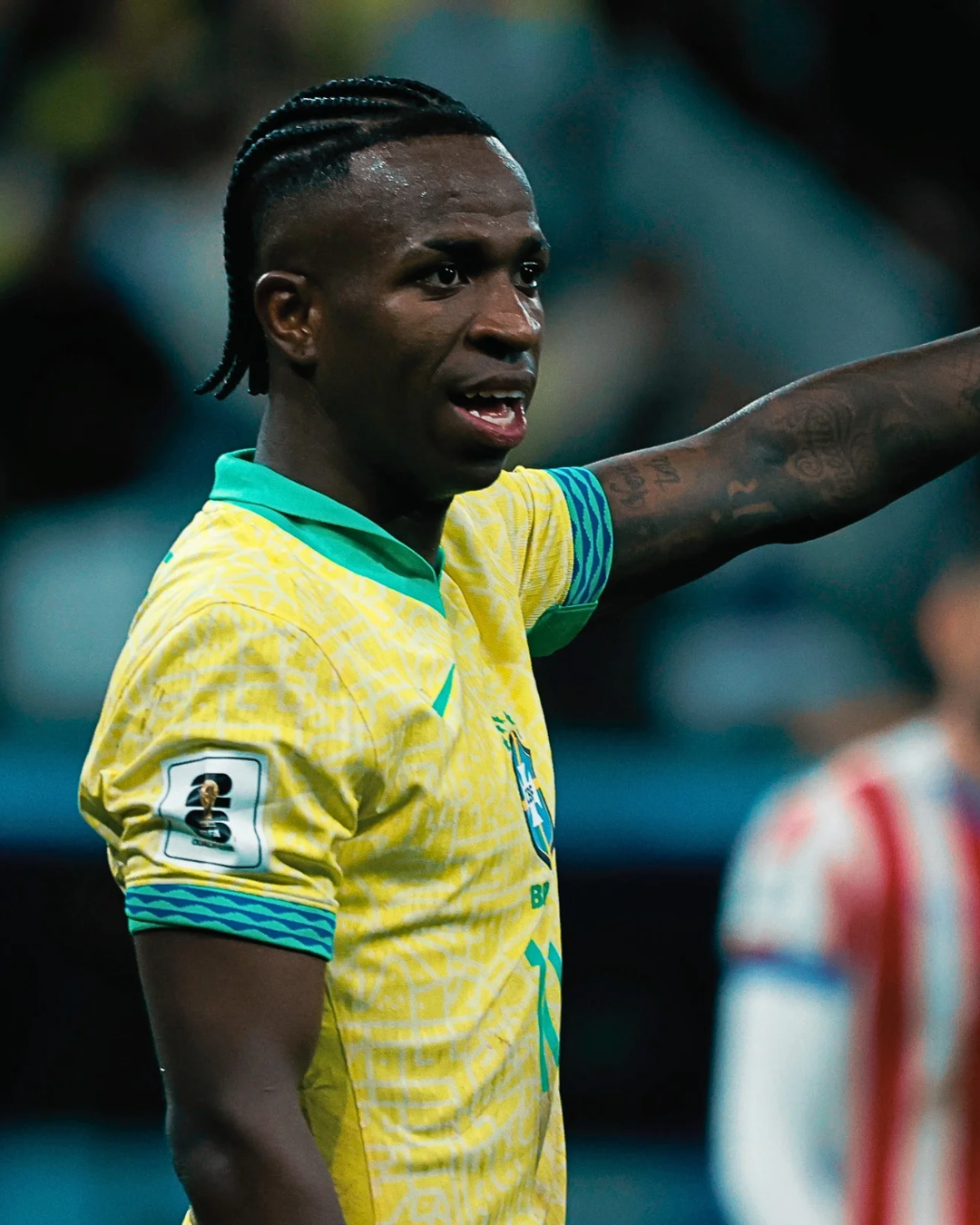
Vini Jr. during the match between Brazil and Paraguay for the South American Qualifiers for the 2026 FIFA World Cup, WM, Weltmeisterschaft, Fussball at the NeoQuimica Arena, in Sao Paulo, on the evening of Tuesday, the 10th. Photo: Adriana Spaca SPP (Adriana Spaca SPP) Copyright: xAdrianaxSpacax xSPPx spp-en-AdSp-_PAC5338
The Brazil Men’s National Football Team is arguably the most notable organization of the sport in the world. The classic yellow and green uniforms, flashy, eye-catching street style of play, and long list of historical success have made them a household name in conversations regarding international football.
But reality eventually has to step up to the podium, and despite all these fantastic traits Brazil hasn’t lifted the World Cup trophy in 24 years. In the 5 World Cups since, Brazil has been capped at 4 quarterfinals, with losses to France, Netherlands, Belgium, & Croatia, and a single semifinal appearance, being the infamous 7-1 loss to Germany in 2014.
Going into 2026 the overall philosophy of Brazil should be different from what we’ve seen in the past. On May 12, 2025, the Brazilian Football Confederation brought in Carlo Ancelotti as the new manager of the team, an Italian who left his fingerprints all over European football, with 5 UEFA Champions League titles to his name, a record for a manager. What makes his hire so special isn’t just his established resume, but the fact that he’ll be Brazil’s first foreign head coach in 60 years, and the very first to lead them into a World Cup.
Many criticisms surrounding Brazil have been their struggle to keep up with the systemic natures of European football. The track record can back this up, as their last 5 World Cup exits have all been to powerhouse European teams, 2 of which would go on to win the whole tournament. While those teams may not have had better individual players all around, they certainly worked better as a system.
Brazil’s style of play is flaunty, but modern day football contradicts that. While we still have our Yamals and Olise’s of the world, the ability to mold into a system has carried much more value in recent seasons. European club football has always been superior to any other continent, but these days there’s not even a gap. Top clubs such as Real Madrid, PSG, Bayern Munich, Barcelona, and Arsenal are all great representations of machinery based football. Hence why a guy like Ancelotti who’s conquered European football is such an important hire for Brazil.
But Ancelotti doesn’t just bring the idea of a system to Brazil, he introduces the possibility to enhance it, to an entirely new level.
Marrying skill and systemism is something that many of the top European clubs were able to successfully do at their peak (threepeat Madrid, Enrique’s Barcelona, 2008 Manchester United). But international football is a completely new playing field. The philosophies of international teams backtrack decades. Ancelotti being the decorated club manager he is, is stepping into unfamiliar territory with no international experience under his belt. Bringing what’s made him the big name that he is onto the biggest stage there will be challenging, and require a lot of innovation & modernization.
An equally as large question is the overall talent of the Brazil team. On May 18th, Ancelotti announced the 26 man Brazil squad for the upcoming World Cup. As follows…
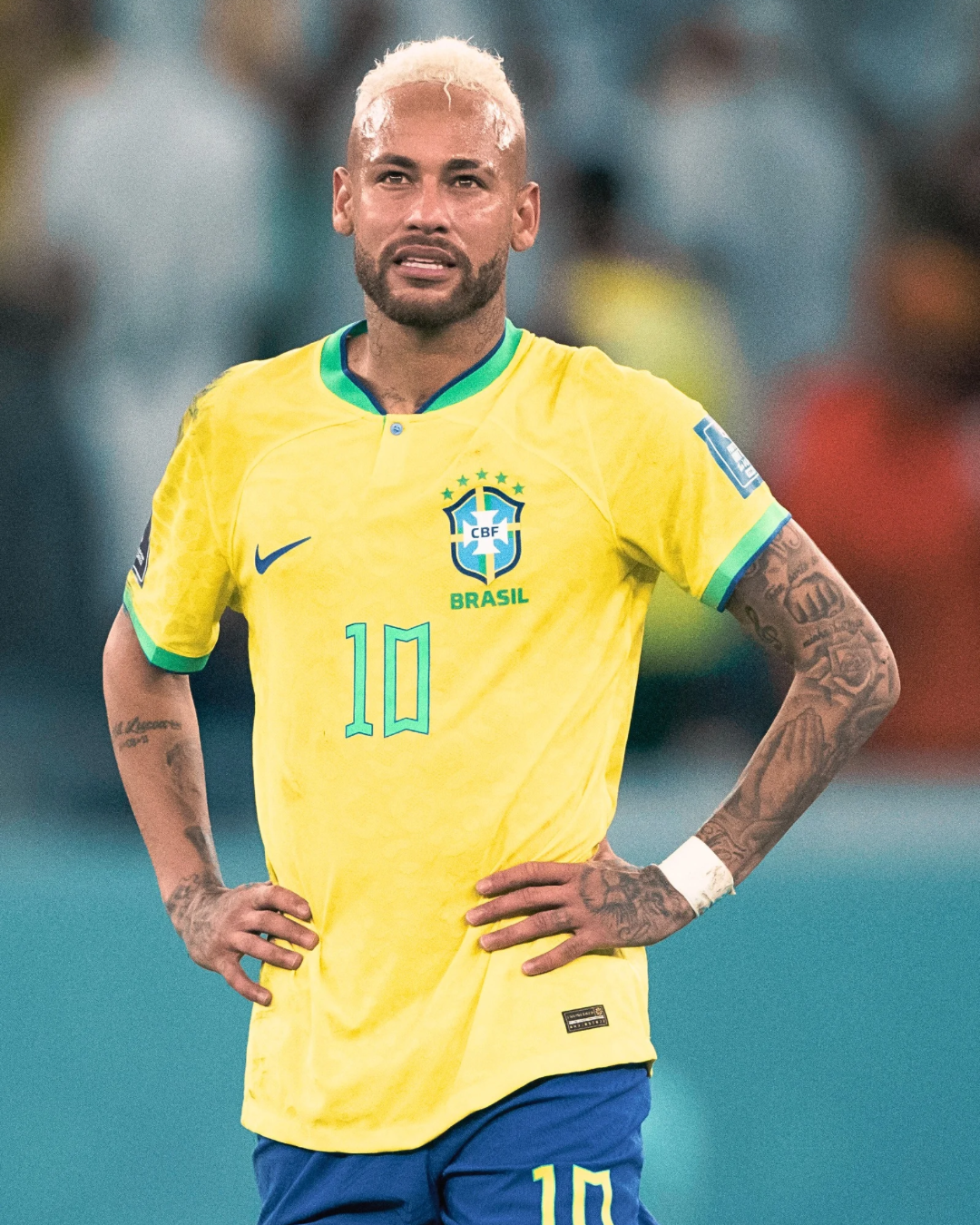
Croatia v Brazil - Quarter Final - FIFA World Cup, WM, Weltmeisterschaft, Fussball Doha. Neymar Jr of Brazil in action during the FIFA World Cup Qatar 2022 quarter final match between Croatia and Brazil at Education City Stadium on December 09, 2022 in Doha, Qatar. Photo by David Niviere ABACAPRESS.COM DOHA Qatar Copyright: xNivierexDavid ABACAPRESS.COMx 834823_050 NivierexDavid ABACAPRESS.COMx 834823_050
Goalkeepers:
Alisson Becker
Ederson
Weverton
Defenders:
Wesley
Marquinhos
Danilo
Alex Sandro
Gabriel Magalhaes
Roger Ibanez
Leo Pereira
Douglas Santos
Bremer
Midfielders:
Casemiro
Bruno Guimaraes
Fabinho
Lucas Paqueta
Danil Santos
Forwards:
Matheus Cunha
Luiz Henrique
Gabriel Martinelli
Endrick
Neymar Junior
Raphinha
Rayan
Igor Thiago
Vinicius Junior
Right away We have to acknowledge the elephant in the room; the absence of Chelsea’s key striker Joao Pedro. His 15 goals throughout the Premier League this season sits only behind Erling Haaland, Antoine Semenyo, and Igor Thiago. The decision to leave Pedro off while essentially picking Neymar over him was met with backlash.
Ancelotti remarked that the thought process for Neymar’s selection over Pedro was based on physical health in the duration of the past year. A fair timeframe of evaluation, but considering Neymar’s laundry list of injury history prior, questioning that ideology would be nothing short of fair. As Ancelotti stated,
“We evaluated Neymar throughout the year, and we saw that in this last period he played consistently and improved his physical condition. We think he is an important player, and he will be an important player in this World Cup.”
“The evaluation for the whole year was solely based on the physical aspect, we talked about that. It was physical. In the last games, he played consistently. He may have the possibility of improving his physical condition before the first game of the Cup. He has that opportunity. His experience in this type of competition, and the affection he has for the group, creating a better environment…”
It seems as if Ancelotti is going for the team morale approach. A respectable philosophy, but the value of what that means to a manager is subjective to the situation of the team in itself. We don’t know what happens in that Brazil dressing room, so maybe its fair to trust the man who does. We also understand the World Cup is every 4 years, strikers as reliable as Pedro who’s only 23 years old don’t grow on trees.
As for the rest of the team, most of the big names lie up front, a potential issue that might need to be schemed around and most likely will with Ancelotti’s midfield heavy past formations. Brazil in recent memory was known for balance across the entirety of the pitch and where we’re used to seeing players like Marcelo and Silva, now lies a question mark.
With Roma and Zenit defenders Wesley and Douglas Santos projected to start at full-back, Brazil is left with solid but not appealing defensive security. Marquinhos certainly speaks for himself at center back, but expect loads of defensive midfield support from Brazil this upcoming World Cup.
We know the names Vinicius Junior and Raphinha, but their international struggles have become increasingly more evident in comparison to their club success. Perhaps this is the real reason Neymar made the final lineup, to act as a physical and mental engine to re-ignite what should be a scary wing duo, by name at least. Vini (for short) and Raphinha are top class European players undoubtedly, but on occasions where they’ve been forced to mesh without the help of Neymar, the tactical flexibility just isn’t there, and they become another great duo of wingers without any correlative flow between the two.
But there lies hope, because a team like Brazil can never just be counted out. With a more than solid midfield who will likely be the primary support of the team, we can expect Ancelotti to scheme his star wingers and fullbacks into favorable, more comfortable positions. If they can guarantee at the very least consistency out of their attack, Brazil’s natural talent under a weathered European philosophy will make them a brutal force in this year’s World Cup.
So what’s their path to glory, or at least what we know of it so far? Brazil will be in Group C this year, sharing real estate with Haiti, Scotland, and Morocco. A moderate group in terms of difficulty for Brazil, but one they should still take very seriously. All 3 matchups will take place in different venues, facing Morocco in New Jersey, Haiti in Philadelphia, and finally Scotland in Miami.
Winning or finishing 2nd in group C matches them up with whoever wins or finishes 2nd in Group F, between the Netherlands, Japan, Sweden, and Tunisia (1C v 2F, 2C v 1F). Brazil’s path like no team’s in World Cup history will be difficult, but an advantage of matchup visibility is on their side.
At the end of the day, some teams just are, and while history alone won’t get you anywhere, Brazil’s longtime competitiveness should bleed over into 2026. There are a lot of internal questions, but a lot of external favorable factors as well. With their first game on June 13th, being against Morocco, one of the best teams in the world and coming off a Cinderella semifinals run in 2022, we will find out a lot about this team quickly.