

From Rio to Ruin
The Fall of Germany’s Football Empire
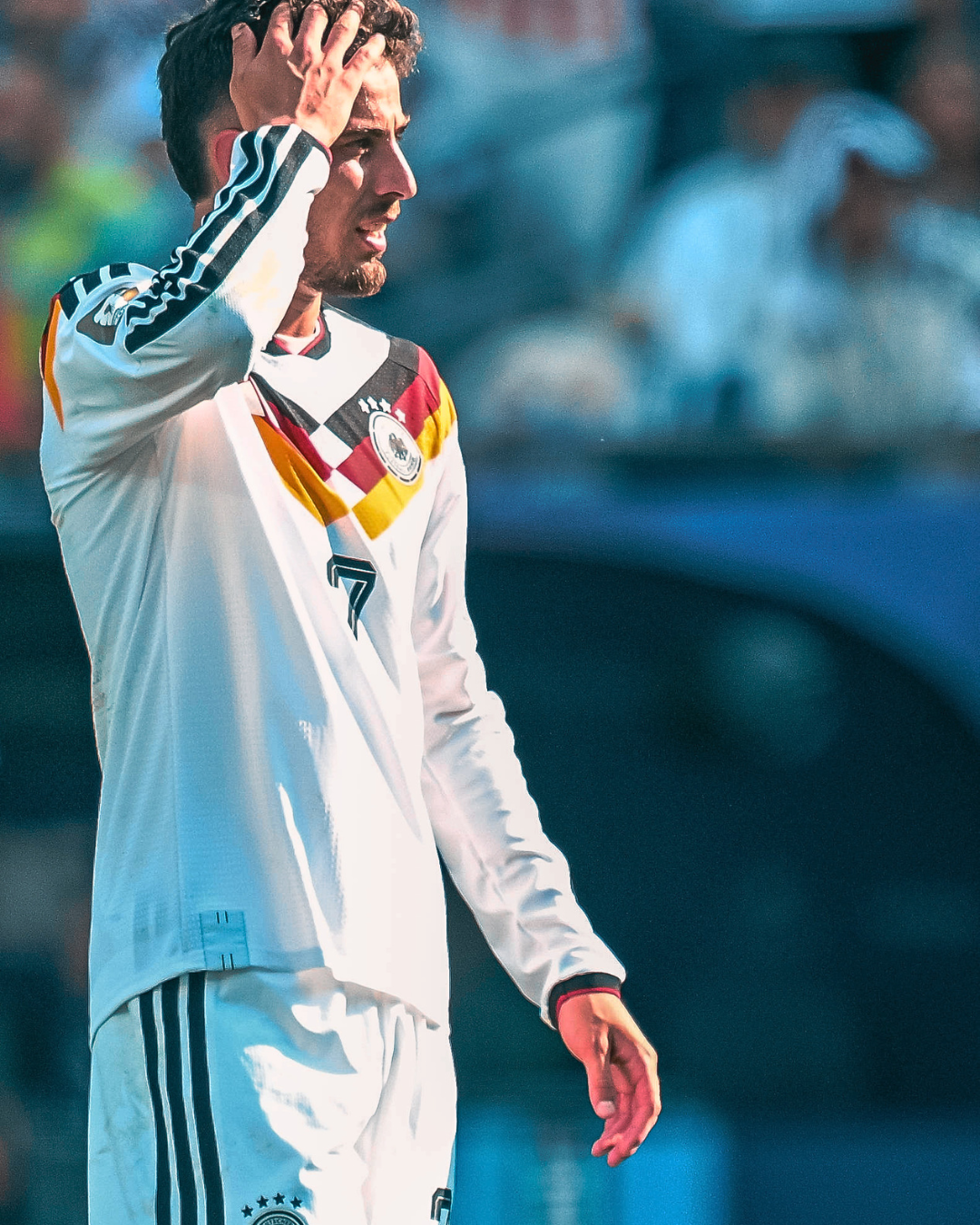
Kai Havertz (Germany) looks dejected during the FIFA World Cup, WM, Weltmeisterschaft, Fussball 2026 Round Of 32 match between Germany and Paraguay at Boston Stadium on June 29, 2026 in Foxborough, United States. (Photo by Harry Langer DeFodi Images) -
2014 is beginning to look like an outlier for German football. The round of 32 loss to Paraguay is one of the biggest upsets in recent World Cup history. In a match full of “despite”, one that Germany dominated on paper with 76% possession, 1.22 more xG, and 600 more passes completed, Paraguay still punched their ticket to the Round of 16, where they’ll see either France or Sweden.
So how on earth did Germany lose a game they dominated on paper? The answer lies in their outdated, passive style of play; that simply doesn’t mesh with their lack of attacking talent. To put things in perspective, we have to look at what made Germany so dominant in the early 2010s; efficiency.
Germany’s 2014 World Cup run was one that saw them defeat the likes of France, Brazil, and Argentina, all teams who were loaded with attacking talent and boasted all time greats on both ends of the pitch. But Germany’s philosophy was centered around a midfield that was a healthy mix of passive and aggressive. The names alone spoil the truth to this, Toni Kroos, Mesut Ozil, Thomas Muller, and Bastian Schweinsteiger were all efficient passers while being necessarily aggressive movers of the ball downfield, which allowed Germany to attack as a unit, instead of relying on individual play. But if all things didn’t go as planned, the former all time World Cup leading goal scorer was present, in Miroslav Klose.
2026 was a repeat of this same method of play for Germany. The 4-2-3-1 formation has been a staple of their football culture and was their formation of choice in the wins against Curacao and Ivory Coast. But the shift came against Paraguay in the Round of 32, a horrible time to experiment.
Germany adopted a 4-4-2 formation in their most crucial moment, straying away from their primary method of success and trading the balance of possession and aggression in the midfield for more blatant roles being placed on the shoulders of the 2 up front.
In a sense this can be seen as suffering from success. Going into the World Cup, Kai Havertz was the lone man up front, receiving plenty of support from the midfield while also relying on them to bring bodies into the box; a healthy balance. What forced Germany to adopt the 4-4-2 was the play of Deniz Undav off the bench, who scored 3 goals in 4 games while adding 2 assists. His production was vital for Germany in the group stage, but his role as a super-sub kept him in better fatigue for many of these matches. A rotation of fresh legs at a position where on paper you're only sending 1 guy to play is genius; so why throw that away?
What’s interesting about Germany in the 21st century is their success despite their lack of dazzling forwards and strikers. Names such as Kroos, Muller, and Lahm have been pioneers for the Germans because of their dynamic style of play, which brings flexibility and creativity to a team that doesn’t have the luxury of asking a Lionel Messi or Kylian Mbappe to bail them out.
So is this method of play outdated? Or does Germany just simply lack the talent to get away with it?
Well the answer is both. Most formations and tactics are centered around the midfield, but not in the traditional sense anymore. Take a team like England for example, who even with names such as Jude Bellingham and Declan Rice, avoid complacency in the middle of the field, and prioritize the long ball and fast breaks. England is at their best when the tempo of the game is fast, which is why Jude Bellingham seems to always have a nose for the goal.
Another example is Argentina. The entire team is centered around Lionel Messi, but their focus is off-ball movement, and how their motions without the ball can dictate when and where opposing defenders go, opening up brief running lanes for Messi and possibly other strikers and wingers to sneak into. Midfield centered philosophies aren’t dead, but the danger of falling into stagnation is more alive than ever.
Germany dominated the possession battle against Paraguay, with the ball at their feet 74% of the time, and over 300% more completed passes. The last team in the World Cup to govern possession by those numbers and still lose, was Spain in 2018, who fell to the host nation Russia 4-3 in a penalty shootout after a 1-1 draw. Scary isn’t it?
That 2018 Spain team was built almost 1:1 to modern day Germany. Physical defenders, a passive midfield, and a singular designated striker. Again, the 9 in the 4-2-3-1 receives plenty of help from the midfield, but that’s only if the players behind him drift into the space. Spain lost to Russia because their efficiency wasn’t met with conversion, allowing a worse team on paper to generate more valuable opportunities in their possessions. If that roster was outdated in 2018, imagine how expired Germany is now.