

The Enigma of Jon Scheyer
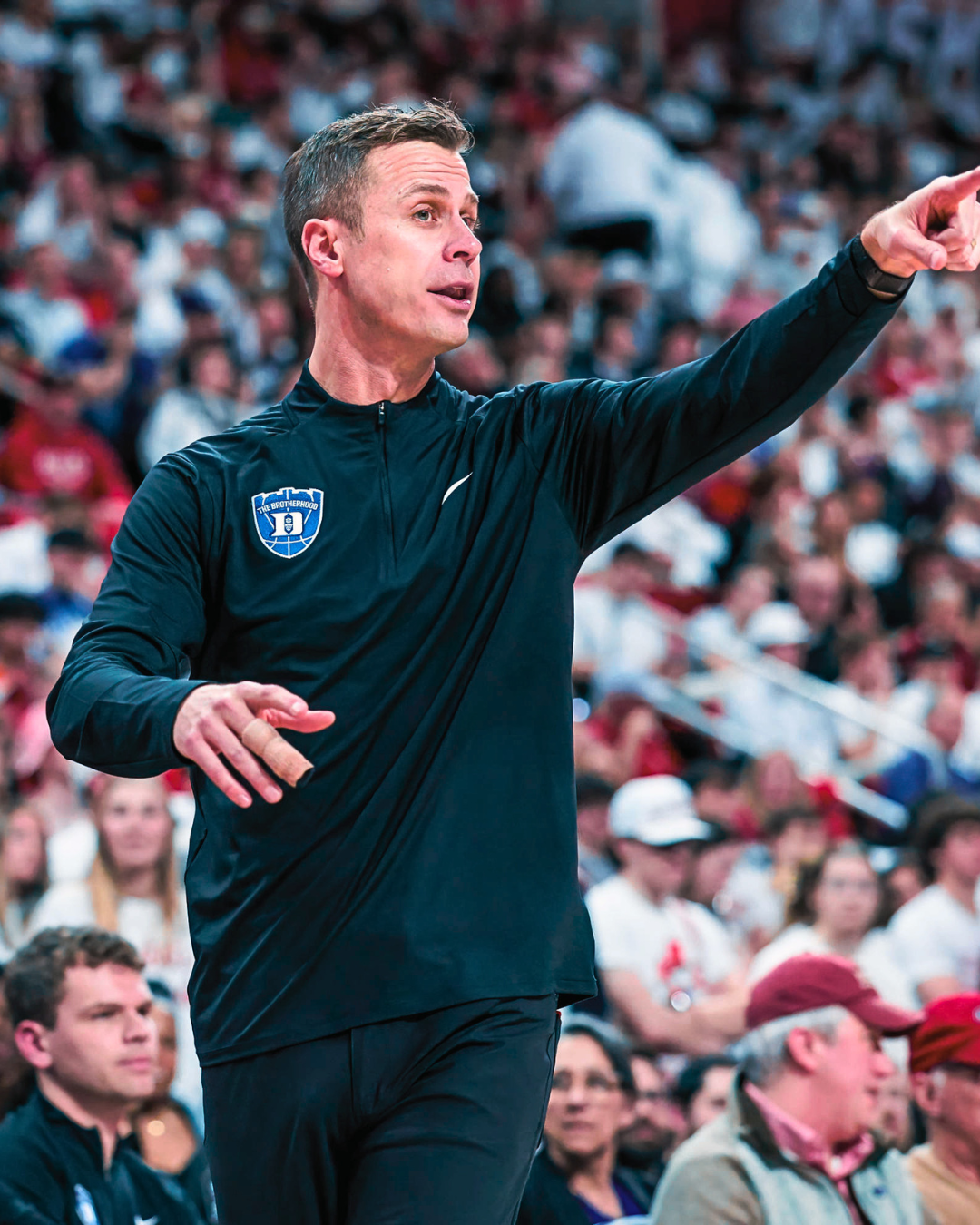
The Duke Blue Devils are once again headed to the offseason empty handed after dropping an absolutely devastating heartbreaker to the UConn Huskies, a game in which they led by 19 points. The game ended in the exact same way the majority of Duke’s losses have over the past two seasons: with them in a great position to win late, only for poor execution in clutch moments to be their downfall. We’ve seen it time and time again—against UConn, UNC, Texas Tech, and dating back to last season against Houston and Clemson as well. It has been very difficult for Scheyer’s teams over the past two years to close out games. This article will critically analyze Jon Scheyer as a coach and cover what needs to happen moving forward to change the narrative of “death, taxes, and Duke choking.”
On one hand, you have to absolutely hand it to Scheyer. In an era where roster continuity is nearly impossible, he just navigated an offseason where zero of his players (all of whom came off the bench for last year’s team) transferred out of the program. He is also an unbelievable recruiter, as he projects to enter 2026 with his third consecutive No. 1 overall recruiting class, a feat that legendary Duke coach Mike Krzyzewski was never able to accomplish. So it is clear that in the NIL era, Duke has been playing a completely different game than everyone else when it comes to constructing its roster, using the transfer portal much more sparingly than other premier programs and focusing on young talent and roster retention rather than targeting a full starting five of transfers every year, like teams such as Michigan this year and Alabama last year have done. Essentially, every Duke team since 2016 has followed almost the exact same blueprint. Each has had a superstar underclassman big man that the entire offense runs through: think Brandon Ingram, Jayson Tatum, Marvin Bagley, Vernon Carey, Zion Williamson, Paolo Banchero, Kyle Filipowski, Cooper Flagg, and Cam Boozer. Each has had a complementary group of limited guards who are okay with not having the ball in their hands as much as is typical for a college guard: i.e., Caleb Foster, Tre Jones, Quinn Cook, Tyrese Proctor, Jeremy Roach, Cayden Boozer, Trevon Duval, Trevor Keels. Each has had a really good second option that is more of a specialist: sharpshooters like Luke Kennard, Grayson Allen, Kon Knueppel, Isaiah Evans, AJ Griffin, Gary Trent Jr., and Jared McCain, or a put-your-head-down-and-drive type like RJ Barrett, Cassius Stanley, or Mark Mitchell. Finally, each has had bigs who are extremely limited offensively and are more focused on defense and rebounding, and generally can’t shoot—think Marques Bolden, Amile Jefferson, Javon DeLaurier, Mark Williams, Pat Ngongba, Dereck Lively, Maliq Brown, Khaman Maluach, Theo John, etc. So while it may seem like Scheyer is doing things differently than everyone else by not using the portal as much, he is ultimately following a blueprint set by Coach K years before he ever took over.
So why isn’t it working? When you look at the teams that have taken Duke down in the Scheyer era, it’s three super physical, elite defensive teams with legendary coaches: Tennessee, Houston, and UConn, and then NC State during its magical 2024 run, which can only really be explained by just that: magic. Otherwise, the formula has been laid out. If you can out-physical Duke and stay in the fight for 40 minutes, you will give them problems. Each of those teams was also much more experienced than the Blue Devils, which certainly showed down the stretch of those games. These teams slow the game down, holding Duke under a point per possession, dragging their effective field goal percentage into the low 40s, and generally force tons of turnovers by pressuring Duke and being ballhawks in the passing lanes. So what gives? Does it come down to coaching? Roster construction? How does Scheyer get his guys over the hump?
Adjust and learn… Everyone is in such a rush for Scheyer to win a national championship because of the program that he inherited, but Duke fans need a reality check. Jon Scheyer is doing unprecedented things for a coach with four years of experience and has learned from his mistakes at every step of his journey. No other coach in the history of college basketball has made three Elite Eights in their first four years at the helm, and Scheyer’s players love playing for him. At some point, that growth has to show up in the margins. The difference right now isn’t talent, it’s execution. It’s late-game decision-making, composure under pressure, and the ability to get a good shot when everyone in the building knows what’s coming. That’s where Duke has fallen short, and that’s the final step Scheyer still has to take. If Scheyer can continue to recruit the way he has been, it is only a matter of time before all of his adjustments begin to catch up, and Duke will be a force to be reckoned with late in games. Duke fans should embrace Scheyer in these tough moments so they aren’t proven wrong when he starts to be on the opposite side of them.
