

France’s 2026 World Cup Preview
Four Years After Heartbreak, France Returns for Another Shot at Glory
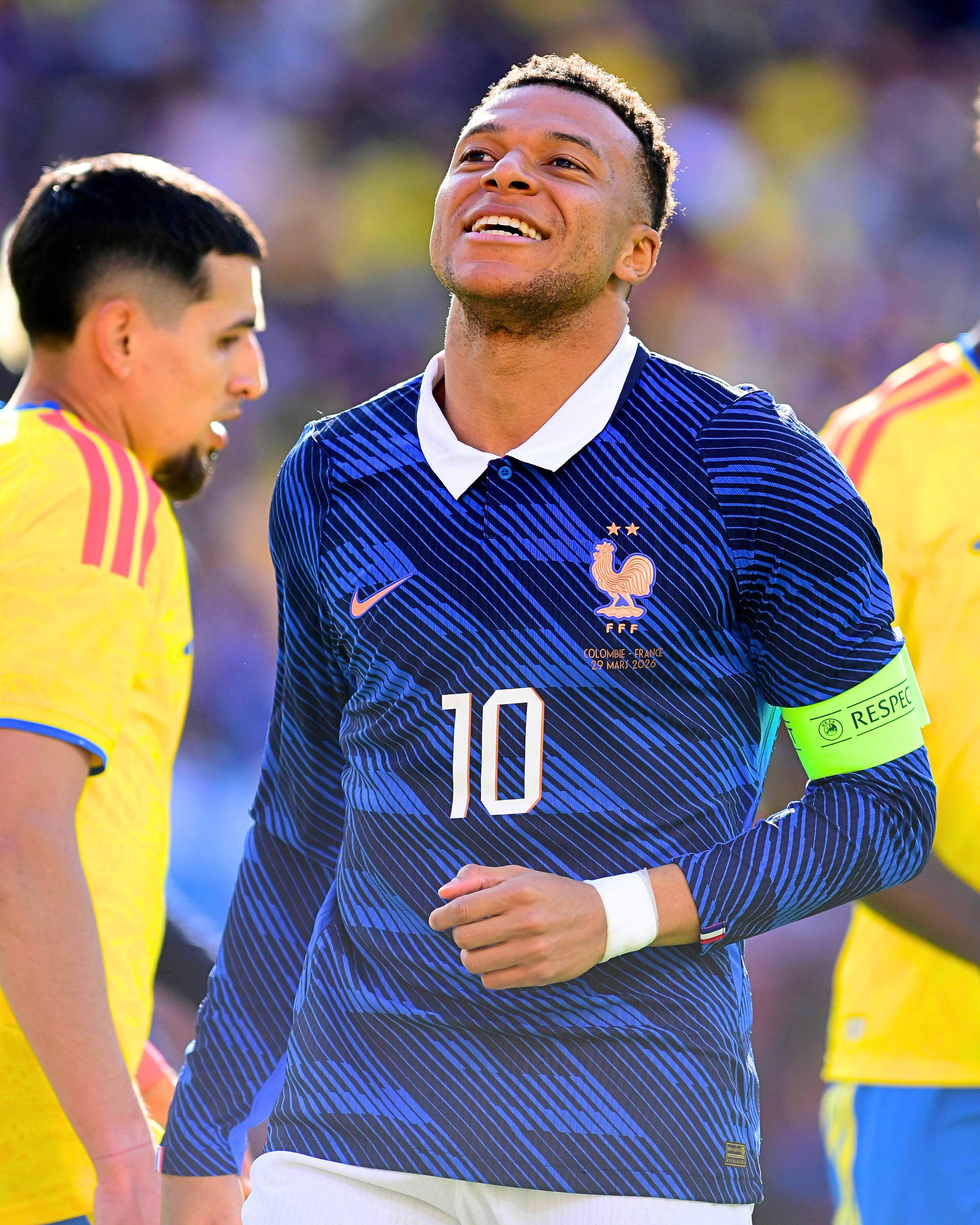
LANDOVER, MD - MARCH 29: France forward Kylian Mbappe (10) smiles after a shot on goal late in the game during the France versus Colombia Road to ™26 international soccer friendly on March 29, 2026 at Northwest Stadium in Landover, MD. (Photo by Randy Litzinger Icon Sportswire) SOCCER: MAR 29 Road to 26 France vs Colombia EDITORIAL USE ONLY Icon9662603291049
After suffering a heartbreaking defeat in the 2022 FIFA World Cup final, France enters the 2026 tournament determined to return to the summit of international football. With a new generation of talent emerging alongside established stars, expectations remain as high as ever for Les Bleus. Several familiar faces from Qatar have moved on, making way for a refreshed squad whose goal is clear: to bring the World Cup trophy back to France for a third time. As one of the tournament favorites, France will once again face the pressure and scrutiny that comes with possessing one of the most talented squads in world football.
The 2026 World Cup will also mark the final tournament in charge for manager Didier Deschamps. Having guided France to multiple major tournament finals during his tenure, Deschamps leaves behind a legacy as one of the nation's most successful coaches. As his time at the helm nears its conclusion, the spotlight will be firmly on whether he can deliver one last memorable campaign and potentially lead France to World Cup glory in his farewell tournament.
Didier Deschamps has built a reputation as one of international football's most successful managers, known for his ability to organize teams and consistently deliver results. While France's style of play has often faced criticism from supporters and pundits who believe the squad's attacking talent should produce a more expansive brand of football, Deschamps has remained committed to a pragmatic approach.
Recognizing the strengths of his squad, particularly its defensive solidity, athletic midfielders, and pace in attack, Deschamps has constructed a system designed to maximize efficiency rather than entertainment. His methods may not always produce the most attractive football, but France's success under his leadership suggests his tactical philosophy has been highly effective. Ultimately, his focus has been on winning matches, and the results have frequently justified that approach.
When the 2026 World Cup concludes, Didier Deschamps is expected to step down as head coach of the French national team, with Zinedine Zidane widely seen as his likely successor. Zidane, familiar to fans both as a legendary player and a successful manager, brings added intrigue as to how he would shape this current squad and whether France can maintain the level of success achieved under Deschamps. With players such as Kylian Mbappé and Ousmane Dembélé leading the group, expectations remain extremely high, and fans will be eager to see how France perform on the biggest stage in the United States this summer.
Before diving into the current squad, it is worth looking back at France’s history. Before the 1998 World Cup, France had produced solid performances but lacked consistency at the highest level. Their first major international success came at Euro 1984, where they won the tournament on home soil, led by Michel Platini, who scored a record nine goals. However, following his retirement, the team went through a decline, failing to qualify for both the 1990 and 1994 World Cups and exiting in the group stage at Euro 1992. A turnaround eventually followed through a combination of Aimé Jacquet’s rebuild and improvements in youth development, leading to their 1998 World Cup triumph, which marked a turning point for French football.
On the 11th of May 2026, France released their 26-man World Cup squad as follows:
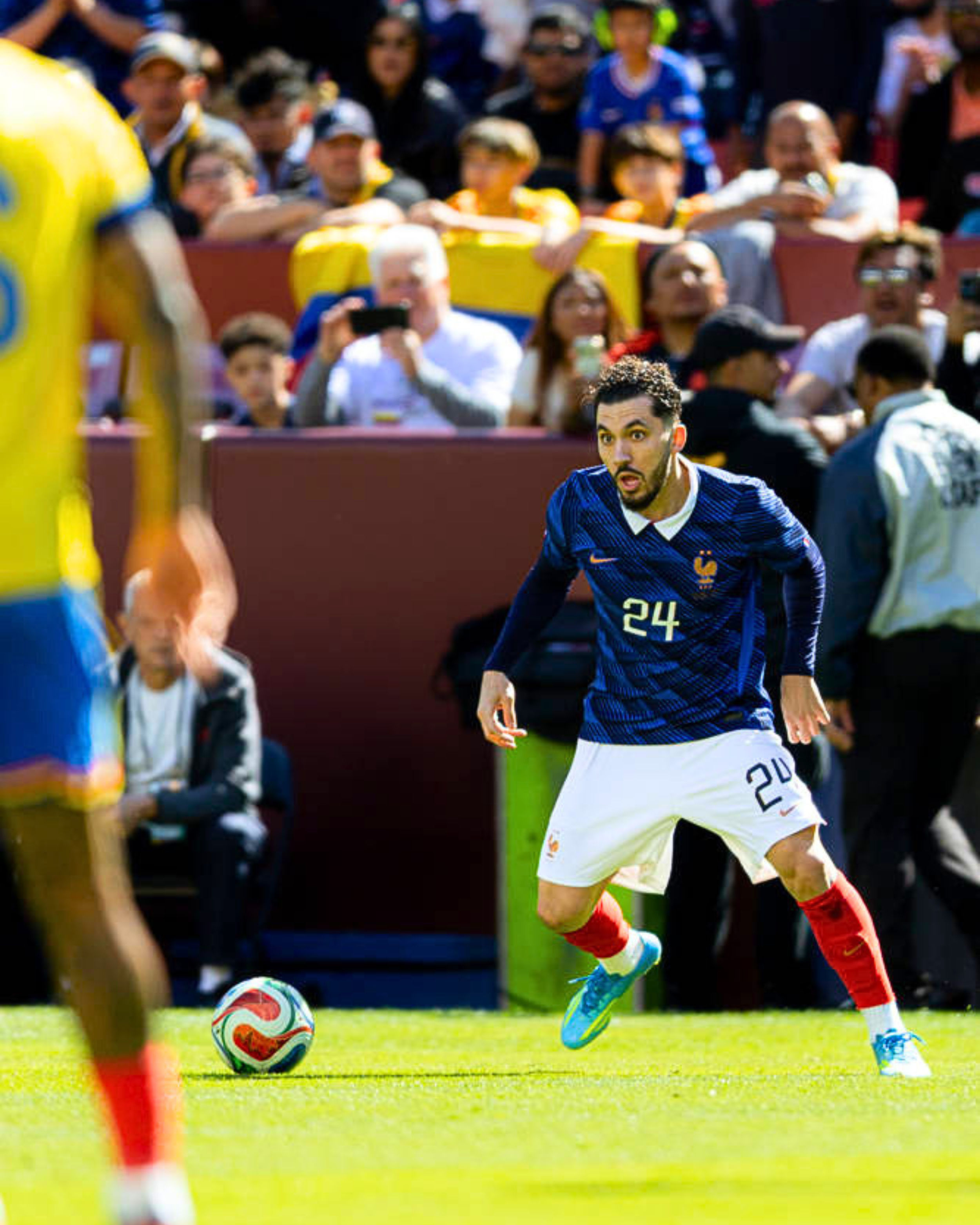
FRANCA X COLOMBIA LANDOVER (USA), 03 29 2026 - FOOTBALL International Friendly, Länderspiel, Nationalmannschaft - in a friendly match between France x Colombia, held at Northwest Stadium, on the afternoon of this Sunday (29). IMAGO Paulo de Tarso MARYLAND Copyright: xPAULOxDExTARSOx
Goalkeepers
Mike Maignan
Robin Risser
Brice Samba
Defenders
Lucas Digne
Malo Gusto
Lucas Hernandez
Theo Hernandez
Ibrahima Konate
Jules Kounde
Maxence Lacroix
William Saliba
Dayot Upamecano
Midfielders
N'Golo Kante
Manu Kone
Adrien Rabiot
Aurelien Tchouameni
Warren Zaire-Emery
Forwards
Maghnes Akliouche
Bradley Barcola
Rayan Cherki
Ousmane Dembele
Desire Doue
Jean-Philippe Mateta
Kylian Mbappe
Michael Olise
Marcus Thuram
Off the back, you can see a very stacked squad, especially in the attack. The captain Kylian Mbappé first made a name for himself on the world’s biggest stage at the 2018 World Cup as a young talent, scoring 4 goals throughout the tournament, including in the final. Although his recent club form with Real Madrid hasn’t been at its best, he is still capable of delivering big performances and keeping his head high, especially for his country, as long as he is fully fit. Many attacks are expected to flow through him, as seen in recent friendlies, and fans should expect to see the best version of him, like in the past two tournaments.
Another notable addition is Ousmane Dembélé, who is coming off another strong season. The Ligue 1 winner has experienced major success over the past year, completing a sextuple with Paris Saint-Germain, winning the Ballon d’Or, and scoring 19 goals in all competitions throughout the 25/26 season. It’s honestly wild to think how far he has come since the 2018 tournament, where he was part of the winning squad despite not being heavily utilized in most matches as he had yet to fully make his mark. Since then, things have changed significantly, and his development has been a positive statement for both his career and his opportunities.
One of the more surprising call-ups was Crystal Palace striker Jean-Philippe Mateta, who received his first senior call-up at the age of 28 after standout performances, including a silver medal at the 2024 Paris Olympics, where the French side had a remarkable campaign. No one would have expected this call-up not too long ago, but as seen with both Dembélé and Mateta, you can never say never in football. Interestingly, after his call-up, Mateta scored the winning goal for Crystal Palace in the Conference League final against Rayo Vallecano, making it his third trophy in just 12 months. Other players such as Olise and Cherki only add to the depth and strength of France’s attacking options on the wings.
In midfield, familiar names such as N’Golo Kanté, Adrien Rabiot, and Aurélien Tchouaméni bring experience and grit. Kanté was also part of the 2018 winning squad and still performs at a high level today, which explains his inclusion. For Manu Koné and Warren Zaïre-Emery, this is their time to shine and potentially establish themselves within the squad, as this is their first major call-up. Both have performed well for their respective clubs and fully deserve their place in the squad.
When the squad was announced, there was also debate over whether Real Madrid midfielder Eduardo Camavinga should have been included after missing out, but his struggles on and off the pitch quickly ended those conversations. He hasn’t been at his best, and Deschamps made the decision not to select a player who is not currently performing at the expected level.
The defence is also very solid, featuring notable names such as Saliba, Jules Koundé, and Upamecano. That said, Deschamps will have to pair the right defenders together, as some of these players can be inconsistent at times and are liable to errors, which France will want to avoid the further they advance in the tournament. However, it is not seen as a major issue given the squad depth and how Deschamps’ tactics are expected to play out when the time comes.
France was drawn into Group I this year, a group consisting of Senegal, Iraq, and Norway, which on paper doesn’t sound too difficult, but it will not be an easy task. Senegal comes in off an AFCON victory, while Erling Haaland’s Norway are qualifying for the first time with something to prove. Iraq may not be as challenging, but as seen in World Cups over time, upsets can never be ruled out. They kick off on June 16th against Senegal, before facing Iraq and then Norway. Although Senegal is not the easiest start, it can serve as an important test to identify areas for improvement ahead of the remaining matches, especially against a team like Norway.
France will certainly be tipped as one of the favourites and an exciting team to watch, but only time will tell how they respond as they look to recover from the heartbreak of the 2022 final against Argentina. France head into the next World Cup as one of the main favourites, backed by a squad that mixes elite experience with a new wave of young talent. Les Bleus still have one of the deepest squads in international football, with stars like Kylian Mbappé leading the attack and a strong core throughout midfield and defence. They are expected to go far again, but as the tournament progresses, matches become tighter and more demanding on every level. It also carries added weight knowing this could be Didier Deschamps’ final World Cup in charge, with pressure on him to guide France to one last deep run.